
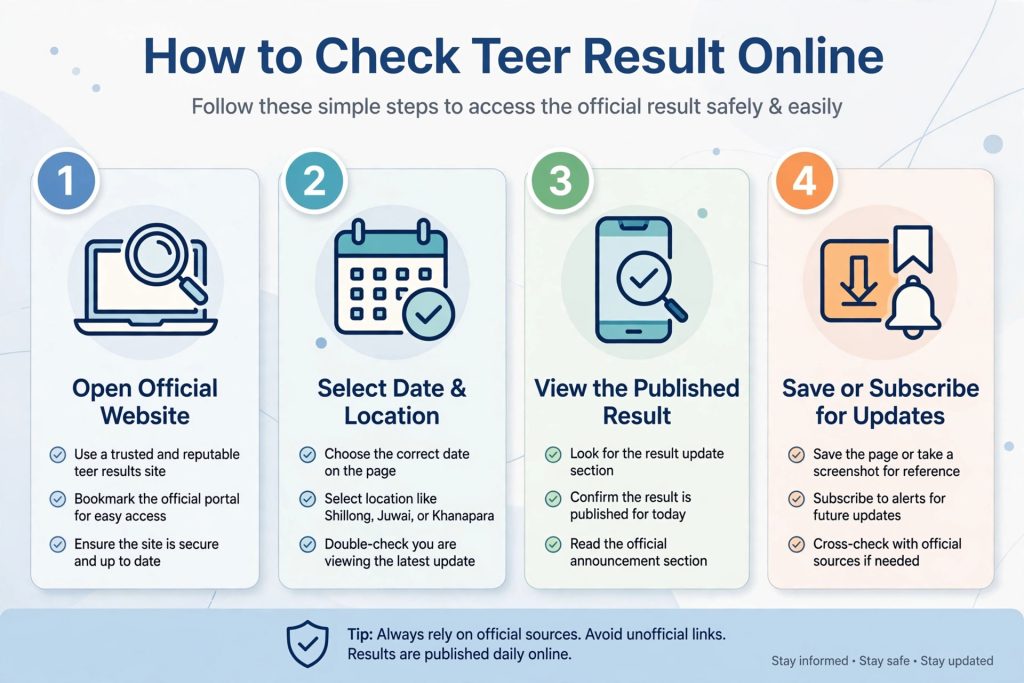
Learning how to check teer result correctly matters more than most players think. A wrong number read from an unreliable page can mean believing you lost when you actually won, or worse, believing you won when you did not. Every day, thousands of people search for the latest Shillong, Juwai and Khanapara numbers, and the internet is full of pages that post them. Not all of those pages are careful, and some are outright misleading. This guide walks you through how to check teer result step by step, explains how the numbers are actually declared at the counters, and teaches you how to verify any number before you trust it. Whether you are checking for the first time or you have followed the game for years, the accuracy habits here will save you from confusion and disappointment.
How to Check Teer Result Step by Step
Checking a teer result is simple once you know the process. The steps below work for every market, including Shillong, Juwai and Khanapara, and for every session, morning, day and night. Follow them in order and you will always land on the genuine number.
Step 1 – Know which market and round you are checking
Teer is played in several markets, and each market declares two numbers every playing day. The main markets are Shillong, Juwai and Khanapara, and each also runs morning and night sessions on certain days. Before you check anything, decide exactly which market and which round your ticket belongs to. A Shillong first round number is not interchangeable with a Khanapara first round number, and a first round number never applies to the second round. Mixing markets is the single most common reason people misread results. If your ticket says Shillong FR, then only the Shillong first round number matters for you. Our teer result list keeps every market and round clearly labelled so you can see the right column at a glance.
Step 2 – Check only after the declaration time has passed
Each round has a fixed declaration window, and the number is not official until the counting at the counters is complete and the result is announced. Shillong day results typically appear in the afternoon, Juwai in the early afternoon and Khanapara in the evening, with morning sessions declaring late morning and night sessions late evening. Timings can shift slightly on a given day, so never trust a number that appears well before the expected window. If a site shows a result suspiciously early, treat it as unverified. A disciplined checker waits for the declaration window and only then opens a result page. You can start from the Best Teer Result homepage, where the day’s numbers are posted as soon as they are confirmed.
Step 3 – Read the number format correctly
Teer results are published as two digit numbers, from 00 to 99. Read both digits carefully, because a 60 and a 06 are completely different results. Some pages write numbers with leading zeros and some drop them, so if you see a single digit, mentally confirm whether a zero was dropped. The official style is always two digits. When you compare the result with your ticket, match both digits in the right order. New players sometimes read the number backwards or confuse the round columns, so slow down on this step. It takes ten seconds and it prevents the most avoidable errors in the whole process.
Step 4 – Confirm the date on the result
Always check that the result you are reading is dated today. Many pages keep old results visible for reference, and search engines sometimes show yesterday’s page in the results. Look for the date printed next to the number. If the date is missing or looks stale, you may be reading an archive page. Yesterday’s number tells you nothing about today’s game. Pages that archive history, like our teer result list, label each day’s results clearly, which makes this check easy. Make confirming the date a reflex every single time you check.
Step 5 – Cross check on a second source
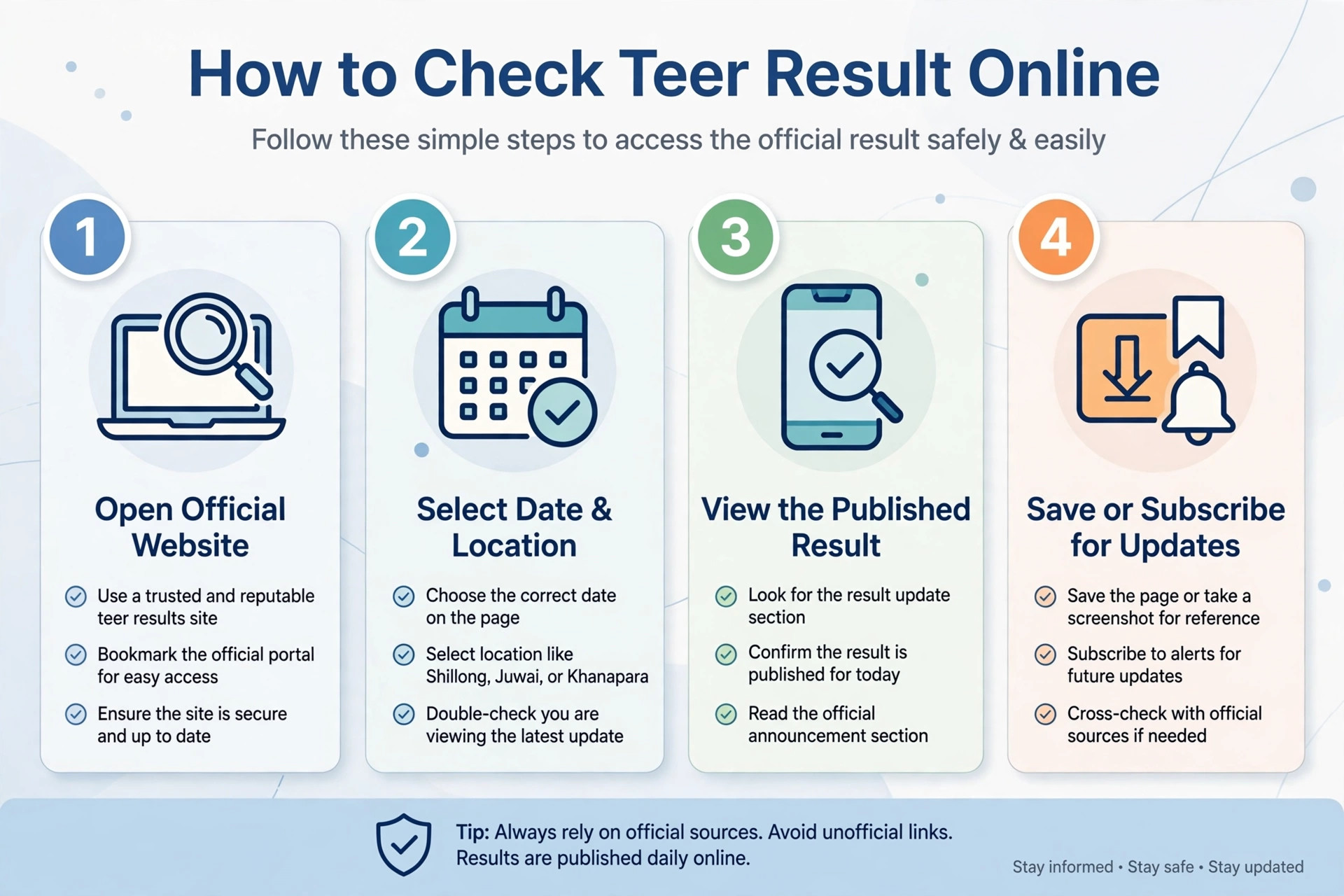
This is the accuracy habit that separates careful checkers from careless ones. Once you have a number from your first source, open one more independent source and compare. If both show the same number for the same market, round and date, you can trust it. If they disagree, do not act on either until a third source settles it. Two independent sources agreeing is a very strong signal of correctness. Bookmark two result pages you trust and use them as your standard pair. The section below on cross checking explains exactly how to pick sources that are genuinely independent.
Step 6 – Match the result against your ticket calmly
Only after the number is verified should you compare it with your ticket. Read your ticket’s market, round and chosen number, then compare digit by digit. Do this in good light and without rushing. Many players check in a hurry on a phone screen and misread their own ticket rather than the result. If you believe you have won, read both the ticket and the result a second time before celebrating or making any claim. A calm, second look is the cheapest insurance in this game.
Step 7 – Record the result for your own records
Note the verified number, market, round and date somewhere safe. A simple note on your phone works. Keeping your own record helps you spot patterns in how often a source is late or wrong, and it gives you a personal archive if you ever need to settle a disagreement about what a day’s number was. Players who keep records also become noticeably better at noticing when a website posts an error, because they have their own history to compare against.
Understanding How a Teer Result Is Actually Declared
To check results accurately, it helps to understand where the numbers come from. Teer is an archery based lottery played in Meghalaya under a legal framework, and the result is not drawn by a machine or chosen by a computer. It emerges from a real archery contest held at authorised venues.
The archery rounds and the counting
In each round, a group of archers shoots a fixed number of arrows at a target within a set time. When the round ends, officials count how many arrows struck the target. Only the last two digits of that total count become the declared result. So if the count ends in a particular two digit figure, that figure is the result for the round. This is why results are always two digits. The counting is done in the open at the venue, witnessed by those present, which is the first layer of authenticity in the whole system. You can read a general background on the game on Wikipedia’s Teer article, which describes the archery format and its history.
First round and second round
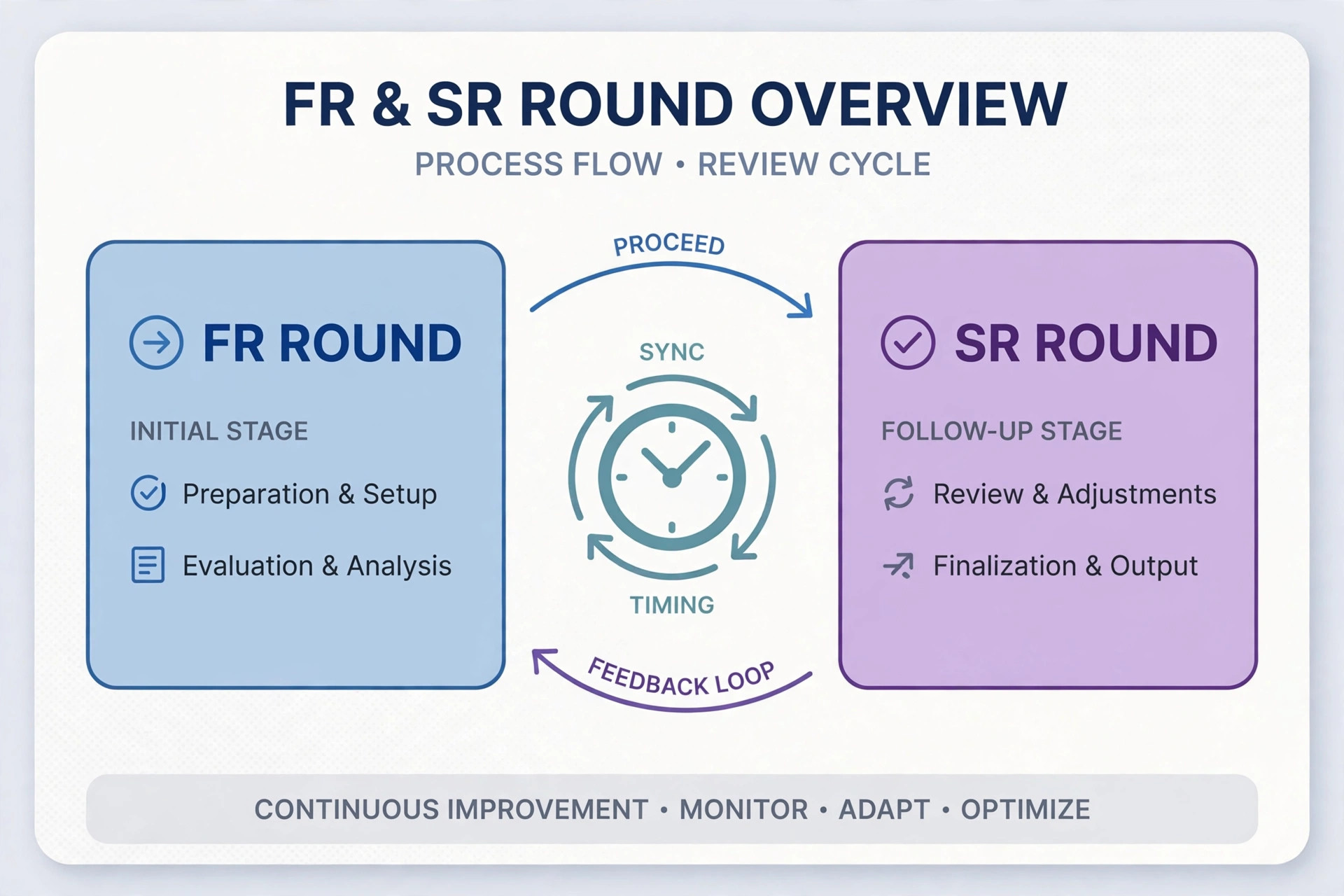
Every playing day has two rounds, called the first round (FR) and the second round (SR). The archers shoot again for the second round and a fresh count produces a fresh number. The two rounds are completely independent, so the FR number has no connection to the SR number. Tickets are sold separately for each round, and prizes are calculated separately. When you check, you must look at the column for your round. The Shillong Teer result page shows FR and SR side by side with clear labels, which removes the guesswork.
What happens at the counters after declaration
Once officials finalise the count, the result is announced at the venue and relayed to the authorised teer counters across the region. Counter operators display the number for customers, and this counter display is the ground truth of the game. Everything published online is downstream of this moment. There is always a short delay between the physical declaration and the number appearing on websites, because the information has to travel from the venue to the publishers. That delay is normal and expected. It is also why the earliest number you see online is not automatically the most reliable one. Speed and accuracy are different things, and a careful player always chooses accuracy.
Why results sometimes take longer than usual
On some days the declaration runs late. Weather can slow the archery, counting can take longer when the round is close, and technical issues can delay the relay to counters and websites. A delayed result is not a missing result, and it is not a sign that something is wrong. The correct response to a delay is patience, not switching to the first random page that posts a number. Pages that publish during a delay are guessing, and guesses in this game are worthless. Wait for the genuine declaration, then verify it using the cross checking method described below.
Official vs Unofficial Result Postings
One of the most useful distinctions a player can learn is the difference between official and unofficial result postings. Understanding it explains why numbers sometimes differ between websites and tells you which ones deserve your trust.
What counts as official
The official result is the number declared at the authorised venue and displayed at the licensed teer counters. Counter displays, and the associations that organise the game, are the origin of every genuine number. When people say a result is official, they mean it traces back to that declaration. The Government of Meghalaya oversees the legal framework for lotteries in the state, and you can find the state’s official portal at meghalaya.gov.in for context on how regulated activities operate in the state.
What counts as unofficial
Every website, social media page and messaging group that republishes the number is unofficial, including this one. Unofficial does not mean untrustworthy. It simply means the page is reporting the result rather than declaring it. A good unofficial publisher is fast, careful and transparent about its sources, and many players rely on such pages daily because checking online is far more convenient than visiting a counter. The key question is never whether a page is official. It is whether the page is careful.
How careful publishers work
A careful result publisher waits for the declaration, posts the number with the correct date and market labels, and corrects errors openly if one slips through. Careful publishers also keep archives so readers can check past days, and they never mix markets or rounds in a confusing layout. When you evaluate a result site, these are the behaviours to look for. A page that posts on time every day, labels everything clearly and matches other careful pages is a page you can build your routine around.
How to Check Teer Result and Be Sure It Is Genuine
Knowing how to check teer result numbers is only half the skill. The other half is verification. The method below takes about two minutes and gives you confidence that the number on your screen is the real declared number.
Pick two independent sources in advance
Do not choose your sources in the moment. Decide now which two result pages you will use every day. Good candidates are established pages with a long publishing history, clear date and market labels, and archives of past results. The two sources should be genuinely independent, meaning they are run by different publishers and not just mirrors of each other. If two pages always post at the exact same second with identical layouts, they may share a single feed, and comparing them proves nothing. True independence is what makes cross checking powerful.
Compare market, round, date and number
When both sources have posted, compare all four elements, not just the number. The market must match, the round must match, the date must match, and then the number must match. A surprising number of apparent disagreements turn out to be someone comparing Shillong FR on one site with Shillong SR on another, or today’s number with yesterday’s archive. Compare carefully and most disagreements disappear. When all four elements agree across two independent sources, the result is as verified as it can reasonably be.
Use a third source as the tiebreaker
If your two sources disagree, bring in a third independent source before doing anything else. Two out of three agreeing is a strong resolution. If all three disagree, which is extremely rare, wait and check again after some time. Early in the declaration window, publishers sometimes post at slightly different moments or correct an initial typo, so a short wait often resolves the conflict on its own. Never act on a disputed number. A few minutes of patience costs nothing, while acting on a wrong number can cost you a prize or cause a false celebration.
Check the counter display if you can
The ultimate verification is the display at an authorised teer counter. If you live near one, a quick look at the counter board settles every online doubt instantly. Counter operators display the declared number for customers, and this is the ground truth everything else reports. Many players who buy tickets at counters simply read the board when they return, which is the simplest verification method of all. Online checking is convenient, but the counter remains the reference point.
Watch for corrections and updates
Even careful publishers occasionally post a wrong digit and then fix it. If you checked very early, it is worth one more look a little later to catch any correction. Some pages note when a result has been updated, which is a sign of an honest publisher. Make your final check of the day a relaxed one, after the dust has settled, and record that final number in your own notes. This habit also protects you if you check results for someone else, such as a family member, because you will be passing on a confirmed number rather than a first draft.
Spotting Fake Teer Result Websites
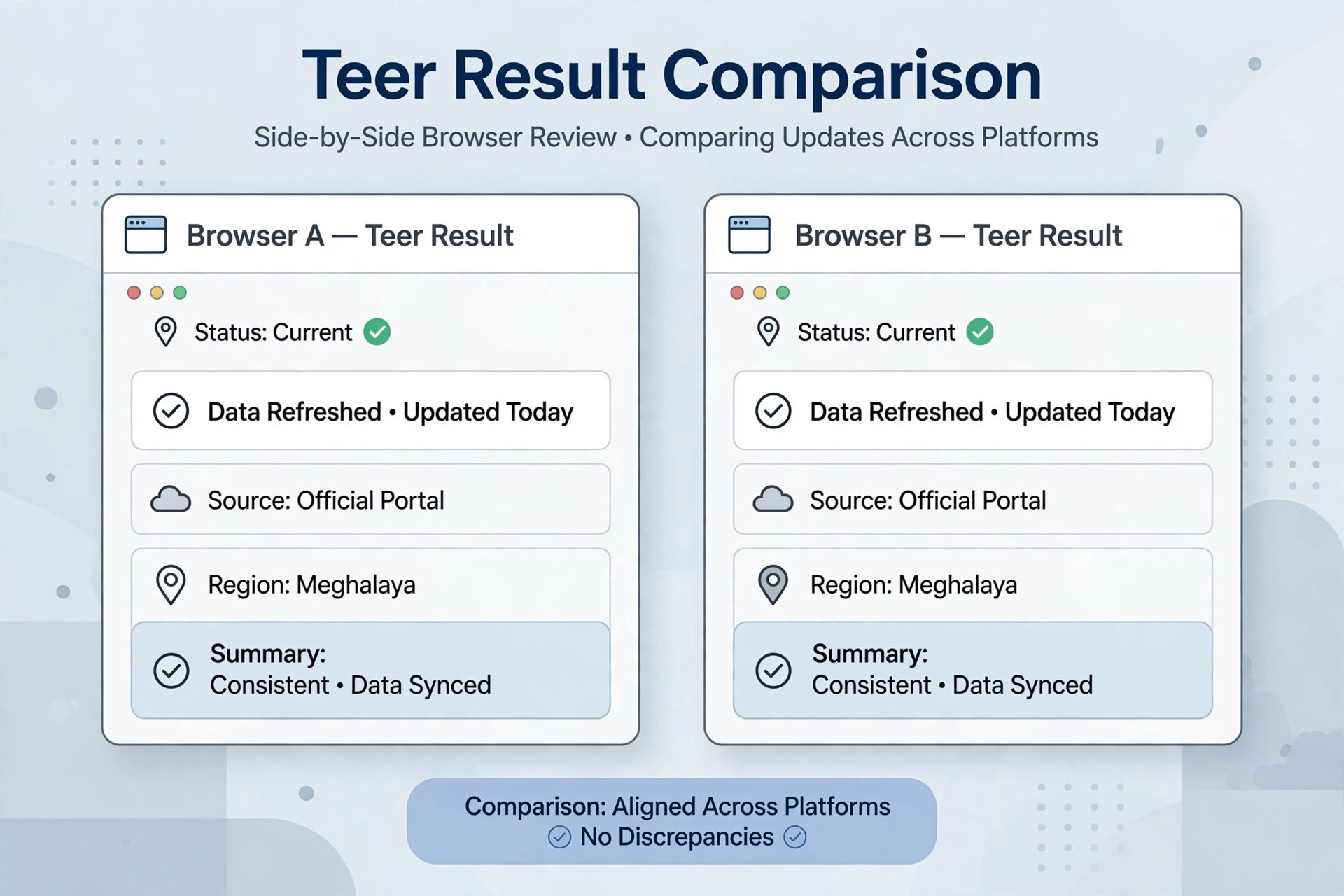
Fake and careless result sites are the biggest threat to accurate checking. Some are simply sloppy, but others are designed to mislead. Here is how to tell them apart from genuine publishers.
Warning sign 1 – Results posted impossibly early
If a site shows today’s result long before the declaration window, it is not reporting, it is inventing. Genuine publishers wait for the declaration. A site that consistently posts first by a wide margin is either guessing or publishing placeholders as if they were results. Either way, it cannot be trusted. Compare posting times across sites for a few days and the early posters will reveal themselves.
Warning sign 2 – No dates or confusing labels
A trustworthy result page always shows the date next to the number and labels the market and round clearly. Pages that show bare numbers with no date, or that jumble Shillong, Juwai and Khanapara together without headings, are inviting misreads. This is often sloppiness rather than malice, but the effect on you is the same. A page that makes it hard to know what you are reading is a page to avoid.
Warning sign 3 – Numbers that never match anyone else
Check a suspicious site against your two trusted sources for a week. If its numbers regularly disagree with both of them, stop using it. Occasional differences happen during corrections, but a persistent pattern of disagreement means the site is unreliable. Your own records, kept as suggested in Step 7, make this comparison easy.
Warning sign 4 – Aggressive popups and forced downloads
Result checking should never require you to download an app, allow notifications or click through layers of popups. Sites that bury the number under aggressive advertising are optimised for ad revenue, not for your accuracy. Worse, some use fake download buttons that install unwanted software. A clean page that shows the number plainly is almost always the more careful publisher.
Warning sign 5 – Prediction content mixed with results
Be cautious of sites that publish results alongside so called common numbers, target numbers or guaranteed winning tips. No one can predict a teer result, because it depends on a live archery count. Sites that sell certainty about future numbers are in the business of misleading visitors, and that same carelessness infects their result postings. This site publishes results and educational guides only, never predictions, and we recommend you hold every result site to that standard.
Common Mistakes People Make When Checking Teer Results
Even with good sources, small reading errors cause big misunderstandings. These are the mistakes we see most often, and each one is easy to avoid once you know about it.
Mixing up FR and SR columns
The two round columns sit side by side on most pages, and tired eyes swap them. Always read the column heading before reading the number. If you play the first round, your eyes belong on the FR column only. Some players find it helps to cover the other column with a thumb on a phone screen. It sounds silly and it works.
Reading yesterday’s number as today’s
Search engines and social media shares often surface old pages. The fix is the date check from Step 4, every time, without exception. If you arrive at a result page from a shared link, assume the date is wrong until you have verified it. Shared screenshots are especially dangerous because they carry no live date context at all.
Confusing similar market names
Shillong, Juwai and Khanapara each have day, morning and night sessions, and the names blur together when you are in a hurry. Khanapara results are sometimes labelled under Guwahati or Assam teer on some pages, which adds to the confusion. Slow down and confirm the exact market name on the page matches your ticket exactly. Our Khanapara Teer result page uses consistent naming so there is no ambiguity.
Trusting screenshots and forwarded messages
A screenshot of a result proves nothing about when it was taken or whether it was edited. Forwarded messages in chat apps are worse, because they pass through many hands and pick up errors along the way. Always trace a shared number back to a live result page and verify it there. If someone sends you a number, treat it as a rumour until you have checked it yourself using the steps in this guide.
Checking once and never rechecking
Results are occasionally corrected after posting. A single early check can leave you with a number that was later fixed. The players with the fewest disputes are the ones who check twice, once when the result first appears and once later after things have settled. Build the second check into your routine and you will almost never be caught by a correction.
Checking Teer Results by Market and Session
Each market has its own rhythm, and knowing the layout helps you check faster and with fewer errors. Here is how the main markets and sessions are organised.
Shillong teer
Shillong is the flagship market and the one most players follow. It runs first and second rounds in the day session, with morning and night sessions also operating. Day results arrive in the afternoon and night results late in the evening. Because Shillong attracts the most publishers, it also attracts the most fake pages, so the verification habits in this guide matter most here. The dedicated Shillong Teer result page keeps every Shillong session in one clearly labelled place.
Juwai teer
Juwai runs its own first and second rounds with an earlier declaration window than Shillong’s day session. Morning Juwai results appear late in the morning. Juwai has fewer publishers than Shillong, which means fewer choices but also fewer fakes. The same checking steps apply, and cross checking is just as important because a smaller pool of sources makes each one count more.
Khanapara teer
Khanapara serves the Guwahati and Assam side of the game and declares in the evening for its day session, with a morning session as well. Some pages label it as Assam teer, so confirm you are reading the Khanapara column whatever the heading says. Evening declarations mean many players check Khanapara after work, often on phones in a hurry, which is exactly when the careful reading habits from this guide pay off.
Morning and night sessions
Morning sessions declare late morning and night sessions late evening. These sessions have smaller followings than the day games, so results can take a little longer to appear online and fewer sites carry them. If your trusted sources do not cover a session, find a second source that does rather than relying on a single page. The verification method does not change with the session, only the timing does.

A Daily Routine for Accurate Checking
Putting it all together, here is a simple routine you can follow every playing day. It takes only a few minutes and it covers every accuracy habit in this guide.
First, note which market, round and session your ticket belongs to before you open any website. Second, wait until the declaration window for that session has passed. Third, open your first trusted source and read the number, checking the date, market and round labels as you go. Fourth, open your second independent source and confirm all four elements match. Fifth, compare the verified number with your ticket calmly, digit by digit. Sixth, record the result in your own notes. Seventh, if you checked very early, take one more relaxed look later in the day to catch any correction.
Follow this routine and you will rarely be wrong about a result. More importantly, on the rare day when sources disagree or a declaration is delayed, you will know exactly what to do instead of guessing. That confidence is the real reward of learning how to check teer result numbers properly.
Frequently Asked Questions
What is the fastest way to check teer result online?
The fastest reliable way is to open a trusted result page after the declaration window for your market and session has passed, then confirm the number on a second independent source. Speed alone is a bad measure, because the earliest posted number is sometimes a guess. A two source check adds about a minute and removes almost all risk of reading a wrong number.
How do I know if a teer result website is genuine?
A genuine publisher posts results only after declaration, shows the date next to every number, labels markets and rounds clearly, keeps an archive of past results, and matches other careful publishers day after day. Test any new site against two sources you already trust for a week. Consistent agreement is the proof of genuineness, and persistent disagreement is the signal to leave.
Why do two websites sometimes show different teer results?
The most common reasons are comparing different rounds or dates by mistake, one site posting before a correction, or one site simply being unreliable. Work through the possibilities in order. First recheck that market, round and date match on both pages. Then wait a little and check again, since early discrepancies often resolve when a correction goes up. If the disagreement persists, trust the majority across three independent sources and drop the outlier from your routine.
What should I do if the teer result is delayed?
Wait. Delays happen when the archery or the counting runs long, and the result will be declared in due course. Do not trust any number posted during the delay, because it cannot be genuine. Avoid switching to unfamiliar sites out of impatience, since that is exactly when fake numbers spread. Check back after the usual window, verify across two sources, and carry on with your normal routine.
Can I check teer result on my mobile phone?
Yes, most players check on phones, and the steps are identical. The smaller screen makes careful reading even more important, so zoom in on the number, read the column headings, and confirm the date before trusting what you see. Avoid checking from screenshots or forwarded messages on chat apps. Always open the live result page in your browser and verify the number there.
Is there an official app or website for teer results?
There is no single official app that most players use. The official result is the number declared at the authorised venue and shown at licensed counters. Everything online, including this site, is an unofficial publisher reporting that declaration. Choose publishers by their track record of accuracy and clarity, not by claims of being official, and always cross check important numbers.
What does it mean if my number matches the result?
If your ticket’s number matches the declared number for the same market and round, your ticket is a winning ticket for that round. Double check the match digit by digit, confirm the date, and keep your ticket safe, since the physical ticket is what you need to claim any prize. Each round is independent, so a win in the first round says nothing about the second round.
Conclusion
Knowing how to check teer result numbers accurately is a small skill with outsized value. The steps are simple. Know your market and round, wait for the declaration, read carefully, confirm the date, cross check on a second source, and keep your own records. Behind those steps sits a real archery contest and a real declaration at authorised counters, and every reliable number online traces back to that moment. Treat early numbers with suspicion, spot the warning signs of fake sites, and never let impatience replace verification. Do that every day and you will always know exactly where you stand.
A final responsible note. Teer is a legal lottery in Meghalaya and it is strictly for adults aged 18 and above. Never play with money you cannot afford to lose, and if checking results ever stops being fun, take a break. Accurate information and responsible play go together, and both start with the careful habits described in this guide.