

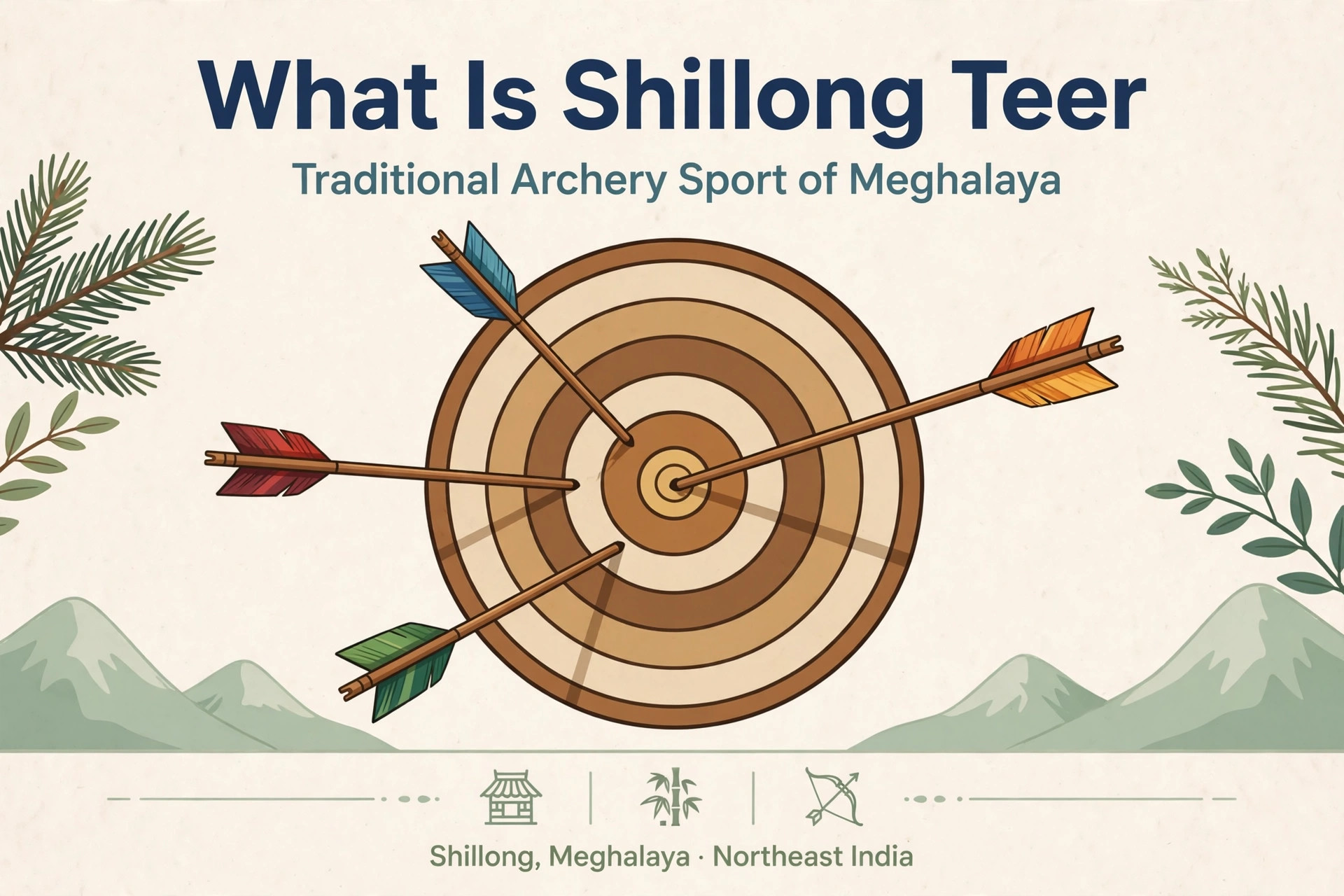
If you have ever searched the internet for a teer result and wondered what is Shillong Teer in the first place, you are in the right place. Shillong Teer is an archery-based lottery game played every day in Shillong, the capital of Meghalaya in Northeast India. It is one of the most unusual lottery games in the world because the winning number is not drawn from a machine or a bowl. It is decided by real archers shooting real arrows at a target. This beginner guide explains the full story: what the game is, where it came from, how it works, when it is played, and whether it is legal.
What Is Shillong Teer – A Simple Definition for Beginners
What is Shillong Teer in the simplest terms? It is a state-authorized lottery in which players buy tickets with numbers from 00 to 99, and the winning numbers are determined by the number of arrows that hit a target during a live archery session. The game is organized by the Khasi Hills Archery Sports Association and runs under the rules of the Meghalaya government.
To understand what is Shillong Teer more completely, it helps to think of it as two things in one. First, it is a traditional archery competition where skilled archers take part in a real sporting event. Second, it is a lottery where thousands of ticket holders wait to see if their chosen number matches the result of that competition. The archery part is completely real and public. The lottery part is regulated by the state, which is why the game can operate openly with licensed ticket counters across the region.
The name itself gives a clue. “Teer” means arrow in Hindi, and Shillong is the city where the game is centered. So “Shillong Teer” literally means “Shillong arrows.” Every day except Sundays and public holidays, archers gather at the Polo Ground in Shillong and shoot arrows in two separate rounds. The count of arrows that strike the target in each round decides the two winning numbers for the day. Players who bought tickets matching those numbers win prize money.
What makes this game different from every other lottery you may have heard of is the skill element. In a normal lottery, a machine picks random numbers and nobody can influence the outcome. In teer, the outcome depends on how many arrows hit the target, which depends on the archers, the weather, the light, and the conditions on the ground. Nobody can predict the exact count, which is why the game stays fair and exciting.
Shillong Teer History – From Tribal Tradition to Legal Lottery
To really answer the question of what is Shillong Teer, you need to know where it came from. The history of the game stretches back much further than most people realize, and it begins long before any lottery tickets were ever printed.
The Khasi Roots of Archery
Archery has been part of Khasi culture for centuries. The Khasi people are the indigenous tribe of the Khasi Hills region of Meghalaya, and the bow and arrow were traditionally tools for hunting and protection. Over generations, archery also became a sport and a form of entertainment. Villages would hold friendly archery contests during festivals and gatherings, and skilled archers earned great respect in their communities.
These contests were casual at first. Men would gather in an open field, set up a target, and compete to see who could land the most arrows. Small friendly wagers between spectators were common, and this informal betting culture slowly grew over time. Nobody planned to create a lottery. The game simply evolved from a beloved village sport into something bigger as more people started placing bets on the outcome of the shooting.
How Teer Became an Organized Lottery
By the early 1980s, betting on archery contests had become so widespread in Shillong that it was happening openly but without any regulation. The Meghalaya government recognized that the activity was deeply rooted in local culture and was not going away. Instead of banning it, the state chose a practical path. In 1982, the Meghalaya Amusement and Betting Tax Act was brought into use, which allowed the government to license and tax the game. This was a turning point in Shillong Teer history because it converted an unregulated street activity into a legal, taxable lottery.
The Khasi Hills Archery Sports Association was formed to organize the actual shooting. This association, which includes dozens of archery clubs from across the Khasi Hills, became the official body responsible for running the daily events. Ticket sales were licensed through authorized counters, and a share of the revenue went to the state. The model worked. The government earned tax income, the archery clubs earned funding to keep the sport alive, and players got a fair, regulated game instead of an underground one.
Today the game is a well-established institution. Tens of thousands of tickets are sold on a normal playing day, and the results are published by many result websites, including our own Shillong Teer result page, so that players can check the outcome of each round quickly.

How Teer Works – The Rules of the Game
Now that you know what is Shillong Teer and where it came from, let us look at the actual rules. The structure of the game is simple once you understand the two rounds.
The Two Rounds – FR and SR Explained
Every playing day has two rounds of archery. The first round is called FR, which stands for First Round. The second round is called SR, which stands for Second Round. Each round produces one winning number, so there are two results per day.
In each round, a group of archers stands at a fixed distance and shoots a set number of arrows at a cylindrical bamboo target. The officials count how many arrows hit the target. The winning number is the last two digits of that total count. For example, if the officials count a total number of arrows hitting the target and the count ends in two digits, those two digits become the winning number. We will not show any real numbers here, because this guide is evergreen and educational. What matters is the method: count the arrows that hit, take the last two digits, and that is the result.
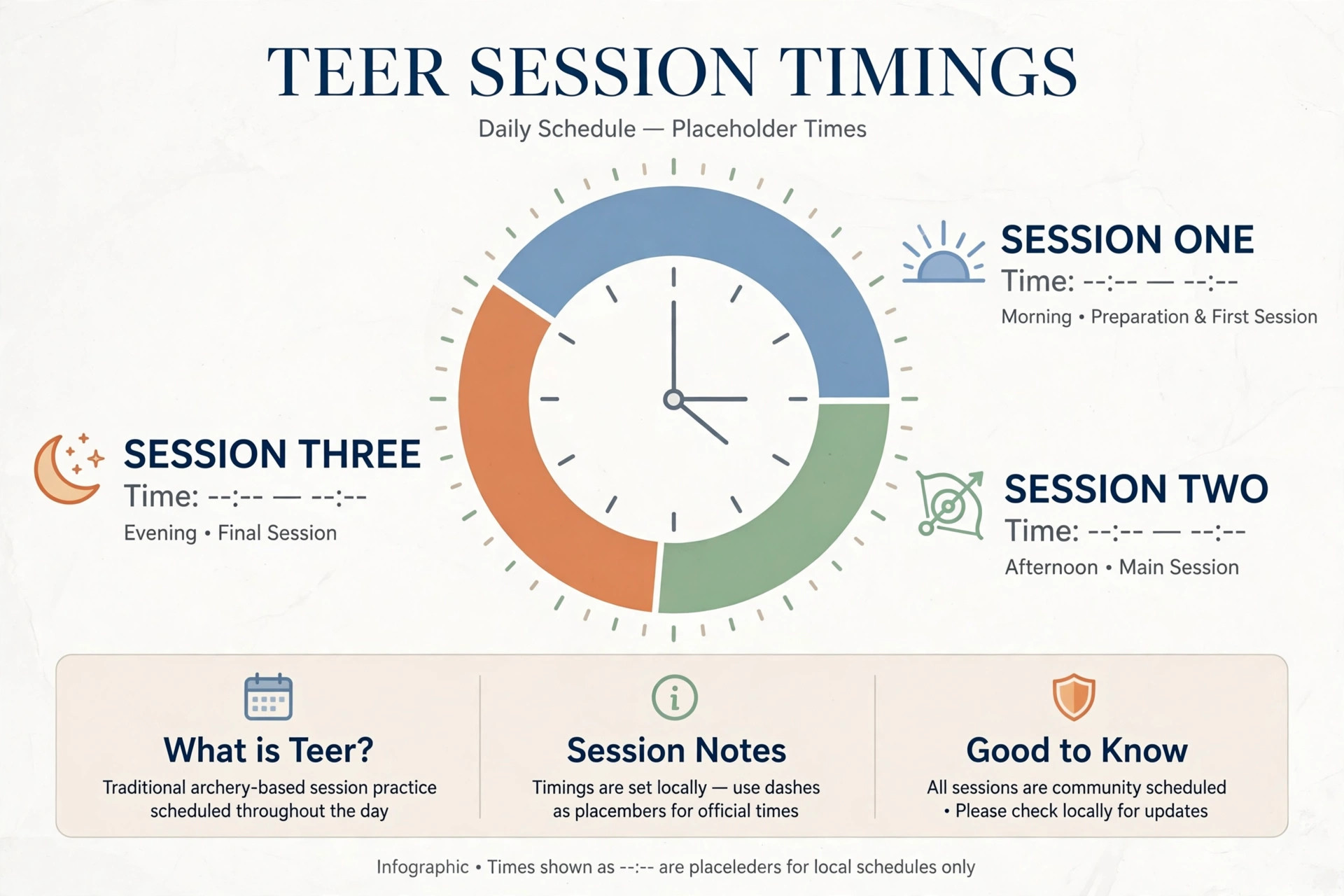
The FR session usually takes place in the afternoon, and the SR session follows later. The gap between the two rounds gives ticket sellers time to close sales for the second round and gives players a fresh chance to participate in the evening session.
How the Winning Number Is Calculated
The calculation itself is deliberately simple so that everyone can follow it. Here is the process in plain steps.
Step 1 – The archers shoot. In each round, the participating archers shoot their arrows at the target within the allotted time.
Step 2 – The officials count. After the shooting ends, officials carefully count every arrow that struck the target. Arrows that missed do not count.
Step 3 – The last two digits become the result. The total count of hitting arrows is noted, and the final two digits of that number are declared as the winning number for that round.
This method is transparent because the shooting happens in public, in front of spectators and officials. There is no machine, no algorithm, and no hidden draw. The number comes directly from a physical event that anyone present can watch and verify.
Ticket Counters and How People Participate
Teer tickets are sold through licensed counters in Shillong and surrounding areas. A player visits a counter, chooses a number between 00 and 99, and pays the ticket price for that number. If the chosen number matches the declared result of the round the ticket was bought for, the player wins a prize based on the amount staked.
It is important to know that teer tickets are sold only at physical licensed counters in the region where the game is authorized. There is no official online ticket sale for Shillong Teer. Any website or person claiming to sell teer tickets online should be treated with caution. Result websites like Best Teer Result exist only to publish the declared numbers and related information. We do not sell tickets and we do not take bets.
Teer Game Timings – When Each Session Happens
One of the most common follow-up questions after “what is Shillong Teer” is “when does it happen?” The game follows a fixed daily rhythm, although exact timings can shift slightly with the season.
The Main Shillong Day Session
The main Shillong teer session takes place in the afternoon and evening. The FR shooting generally begins in the mid-afternoon, and the result is usually declared within an hour of the shooting. The SR shooting follows in the later afternoon or early evening, with its result declared shortly after. Because the shooting happens live, small delays can occur on days with heavy rain or large crowds, so results are declared when the officials finish counting.
Morning and Night Sessions
Beyond the main day session, teer is also played in morning and night sessions under different market names. The morning session serves early players, while the night session gives one more chance in the evening. Each of these sessions follows the same two-round format: an FR round and an SR round, each producing its own winning number.
If you want to follow the early games, our Shillong morning teer result page covers the morning session. For a complete overview of every market in one place, see our full teer result list, which brings the day, morning, and night sessions together.
Is Shillong Teer Legal – The Meghalaya Teer Lottery Rules
A question that naturally follows “what is Shillong Teer” is whether the game is legal. The answer is yes, within Meghalaya. Shillong Teer is a state-authorized lottery operated under the Meghalaya Amusement and Betting Tax Act. The Khasi Hills Archery Sports Association organizes the shooting under a license from the state government, and ticket counters operate with official permission.
This legal status is what separates teer from underground gambling. The game pays taxes to the state, follows published rules, and operates in the open. However, legality applies to the licensed game in Meghalaya. Lottery laws in India are decided state by state, and what is legal in one state may not be legal in another. Players are responsible for knowing the rules where they live.
It is also worth noting that teer is strictly for adults. Only people aged 18 and above may participate. Licensed counters do not sell tickets to minors, and the game should always be treated as entertainment, never as a way to earn a living.
Shillong Teer vs Other Teer Games
When beginners learn what is Shillong Teer, they often discover that it is not the only teer game. Several related markets operate in the region, each with its own archery association and its own daily sessions.
Juwai Teer is the second most well-known market. It is organized in the town of Jowai in the Jaintia Hills and follows the same basic format: two rounds of archery, two results per day. Khanapara Teer is centered near the Assam and Meghalaya border and is popular with players in Guwahati and surrounding areas. There are also morning and night variants of these markets.
All of these games share the same DNA. They are archery-based, they use the last-two-digits counting method, they run two rounds per session, and they are organized under state rules. The differences are mainly in location, timing, and the association running the event. Shillong remains the original and the most widely followed market, which is why most beginners start here.
How to Read a Shillong Teer Result
Once you understand what is Shillong Teer, reading a result becomes easy. A result listing always shows two numbers: the FR number and the SR number. Each is a two-digit number from 00 to 99. When you see a result displayed with a dash or blank placeholder such as “-“, it simply means that round has not been declared yet or no data is available for that slot.
Result websites publish the numbers round by round as the officials declare them. The FR result appears first, followed by the SR result later in the day. Previous days are usually kept in an archive so players can look back at the history of declared numbers. Remember that past results have no influence on future results. Each round of archery is a fresh event, and the number of arrows hitting the target on one day says nothing about what will happen the next day.
For more background on how the game is documented, you can read the general overview of teer on Wikipedia, which describes the archery lottery tradition of the region.
The People Behind the Game
One part of the “what is Shillong Teer” story that often gets overlooked is the human side. The archers are real athletes. Many of them have been shooting since childhood, and the daily sessions are genuine sporting contests for them. The archery clubs that make up the association use their share of the revenue to maintain grounds, train young archers, and keep the tradition alive.
The officials, counters, and organizers form a large local ecosystem. On a busy day, the Polo Ground area fills with spectators who come to watch the shooting itself, not just to wait for a number. For many locals, teer is part of daily life and community culture, not just a lottery. Understanding this helps explain why the game has survived and thrived for decades while other forms of betting have faded.
Responsible Play – Keep It Fun and Safe
Because this guide explains what is Shillong Teer for beginners, it must include an honest word about responsibility. Teer is a form of gambling, even though it is legal and regulated. Like all gambling, it should be treated as paid entertainment, not as income.
Set a strict budget before you play and never exceed it. Never borrow money to buy tickets. Never chase losses by buying more tickets after a losing day. If playing stops being fun, or if you feel unable to control your spending, step away and seek help. The game will still be there tomorrow, and no number is worth risking your financial stability.
Only adults aged 18 and above may take part. Keep the game away from children and young people. A healthy approach is simple: small stakes, occasional play, and zero expectation of profit.


What Is Shillong Teer – Frequently Asked Questions
What is Shillong Teer in simple words?
Shillong Teer is a legal archery lottery in Shillong, Meghalaya. Players buy tickets with numbers from 00 to 99, and the winning numbers are decided by counting how many arrows hit a target during two live archery rounds each day. It is organized by the Khasi Hills Archery Sports Association under Meghalaya state rules.
What is the history of Shillong Teer?
Teer grew out of the centuries-old Khasi tribal tradition of archery in the hills of Meghalaya. Informal betting on village archery contests became so common that in the early 1980s the Meghalaya government brought the game under the Meghalaya Amusement and Betting Tax Act, making it a licensed and taxed lottery. The Khasi Hills Archery Sports Association has organized the official daily events ever since.
How does the teer game work?
Each playing day has two archery rounds, called FR (First Round) and SR (Second Round). Archers shoot arrows at a target, officials count how many arrows hit, and the last two digits of that count become the winning number for the round. Players who bought tickets matching the declared number win prizes.
Is Shillong Teer legal?
Yes, Shillong Teer is legal in Meghalaya, where it operates as a state-licensed lottery under the Meghalaya Amusement and Betting Tax Act. Lottery laws differ from state to state in India, so players should check the rules that apply where they live. The game is strictly for adults aged 18 and above. You can find official state information on the Meghalaya government portal.
When is Shillong Teer played?
Teer is played every day except Sundays and public holidays. The main Shillong session runs in the afternoon and evening with an FR round followed by an SR round. Morning and night sessions also run under separate market names, each with its own two rounds.
Can I buy Shillong Teer tickets online?
No. Official teer tickets are sold only at licensed physical counters in the region where the game is authorized. There is no official online ticket sale. Be cautious of any website or person claiming to sell teer tickets over the internet. Result websites only publish declared numbers and information.
What is the difference between Shillong Teer, Juwai Teer, and Khanapara Teer?
They are separate teer markets in different locations, each run by its own archery association. Shillong is the original and most popular market, Juwai is based in the Jaintia Hills, and Khanapara serves the Assam border region near Guwahati. All use the same two-round archery format and the same last-two-digits result method.
Conclusion
So, what is Shillong Teer? It is a legal archery lottery from the hills of Meghalaya where real archers, real arrows, and a centuries-old tradition decide two winning numbers every day. It began as a Khasi village sport, became a state-licensed lottery in the 1980s, and today runs as one of the most distinctive games of chance in India.
If you are new to the game, the best way to follow it is to watch the daily rhythm of FR and SR rounds and check declared results on a trusted result page. Keep your play small, responsible, and strictly for entertainment. Now that you know exactly what Shillong Teer is, you can follow the game with a clear understanding of the tradition behind every number.