
Every day, thousands of readers search for the jowai ladrymbai teer result, and every day, most of them accept the first number they see. That is a trust decision made in half a second, usually without realising it is a decision at all. This guide slows that moment down. It explains how the Jowai Ladrymbai result is actually declared and verified, how to tell an official source from an unofficial reposter, why confirming with two sources matters, how to spot fake or stale result posts, and what a genuinely reliable result page looks like.
Trust is the whole subject here, because a wrong number is worse than no number. A wrong number recorded in your log corrupts your records. A wrong number acted on costs money. The good news is that verifying a Jowai Ladrymbai result takes less than a minute once you know what to look for. Bookmark our Jowai Ladrymbai teer result page as your primary source, and use this guide as your verification manual.
How the Jowai Ladrymbai Teer Result Is Declared
Trust starts at the source. If you understand where the number comes from, you can judge whether any page showing you a number could plausibly have it.
Real archery, counted by hand
Teer is an archery-based lottery that is legal in Meghalaya, open to adults aged 18 and above. In the Jowai Ladrymbai session, which serves the Jaintia Hills region, archers shoot arrows at a target during the day. Officials count the arrows that hit the target, and the result for the round is the last two digits of that count. This is a physical, manual process. It takes time, it happens once per round, and it cannot be shortcut.
This single fact is your strongest fake detector. Any “result” that appears before the archery for that round could possibly be complete is not a result. Any site claiming to know the number in the morning, before the day’s shooting, is inventing it. The declaration follows the counting; it never precedes it.
Two rounds, two declarations
Each day brings two separate declarations. FR, the first round, is declared first, typically in the afternoon after the first round of shooting and counting. SR, the second round, is declared later in the day after the second round. Each declaration is its own event with its own count. There is no formula linking FR to SR, and a page that presents them as connected is misleading you.
We do not publish exact declaration clock times in this guide, because they are unverified and shift with local conditions. What is stable is the order and the structure: FR first in the afternoon window, SR later. The live result card reflects the true state of the day, which is why a trustworthy page shows a status (declared or pending) rather than a timetable.
What “declared” actually means
A result is declared when the official count for the round is finalised and released. Until that moment, there is no result to report, only an upcoming round. Honest pages mark undeclared rounds as pending or awaited. Dishonest or careless pages fill the gap with yesterday’s number, a guessed number, or a blank presented as if it were data. Learning to read “pending” as a valid, honest state is part of becoming a careful reader.
Official Sources vs Unofficial Sources
Not every page that shows teer numbers is a result source in the same sense. Understanding the chain helps you weigh what you see.
The declaration point
At the top of the chain is the actual declaration: the count, finalised at the archery ground and released through the session’s established channels. Readers almost never see this directly. What readers see are result pages that publish the declared number.
Established result pages
The next link is the established result publisher: a site whose whole job is to post declared numbers quickly and accurately, day after day. These pages earn trust through consistency. They show the session name, the date, FR and SR labels, declared or pending status, and archives of past days. When they are wrong, which happens rarely, they correct visibly. Best Teer Results aims to be this kind of page, and our Jowai Ladrymbai teer result page is built to that standard.
Unofficial reposters
Below that sits a long tail of unofficial reposters: social media accounts, messaging groups, forums, and thin websites that copy numbers from established pages, sometimes accurately, sometimes not, and sometimes with added “predictions” or commentary. These are not sources; they are echoes. An echo can be useful as a cross-check, but it should never be your primary source, because echoes distort. A copied number can pick up a typo. A screenshot can be from last week. A forwarded message can lose its date entirely.
Why the distinction matters
When you read a number on an established result page, you are one step from the declaration. When you read it in a messaging group, you may be four steps away, with each step a chance for error or invention. The practical rule: get the number from the shortest chain available, and use longer chains only for confirmation.
For context on the game itself, the Teer article on Wikipedia describes the archery lottery format, and the Jowai article covers the town at the heart of this session’s region.

Why Two-Source Confirmation Matters for the Jowai Ladrymbai Teer Result
Even good pages have bad days: a typo, a delayed update, a caching glitch. Two-source confirmation is the simple habit that catches these.
What it is
Two-source confirmation means checking the Jowai Ladrymbai result on two independent, established result pages before you record it or act on it. Independent matters: two pages that both copy from the same upstream publisher are not two sources. Pick pages with their own publishing track records.
When to use it
Use it in three situations. First, when the number matters to you, which for most readers means every day. Second, when something looks off: the number changed between visits, the date looks wrong, or the page updated unusually late. Third, during delays, when unofficial numbers are circulating and you want to confirm what the declared number actually was once it lands.
What agreement and disagreement tell you
If both sources show the same number for the same session, date, and round, you can record it with confidence. If they disagree, stop. Do not pick the one you like. Disagreement means at least one page has an error, a stale cache, or a mislabelled round. Wait, reload both pages cleanly, and check a third established source if needed. The truth in teer is singular: one round, one count, one declared number. Pages converge on it quickly when they are honest.
What two-source confirmation is not
It is not collecting five numbers from five random sites and taking a vote. Majority vote among unofficial reposters is meaningless, because they may all echo the same wrong upstream copy. Quality of sources beats quantity every time. Two good sources outweigh ten echoes.
How to Spot Fake or Stale Jowai Ladrymbai Teer Result Posts
Fake and stale posts follow patterns. Once you know the patterns, you can dismiss most of them in seconds.
Red flag one – numbers before archery
Any Jowai Ladrymbai “result” posted before the round’s archery could be complete is fake. This includes morning “confirmed” numbers and “leaked” numbers posted during the shooting. The result does not exist until the count is finalised. Treat early numbers as fiction, however confidently they are presented.
Red flag two – no date, or the wrong date
A genuine result belongs to a specific day. Posts that show numbers without a date, or with a vague “today” on a screenshot that could be from any day, are unverifiable. Stale posts are the quieter cousin of fake posts: a real number from a past day, presented as if it were today’s. Always demand the date. On a result card, check it yourself rather than trusting the post’s caption.
Red flag three – missing round labels
FR and SR are different results. A post that shows a single number without saying which round it belongs to is either careless or deceptive. Worse are posts that show two numbers without labels, inviting you to guess which is which. A trustworthy presentation always labels its rounds.
Red flag four – predictions dressed as results
Some posts blend declared results with “common numbers,” “hit numbers,” or “target numbers” for upcoming rounds. This guide contains none of that content, because prediction numbers are not results and past archery does not determine future archery. Any page mixing predictions with results is not a source you should trust for either. Keep the two categories strictly separate in your own reading.
Red flag five – the page never says “pending”
An honest result page has a visible pending state for undeclared rounds. A page that always shows a number, every hour of every day, is filling gaps with something, and that something is not a declared result. The absence of “pending” is itself a warning sign.
Red flag six – pressure and urgency
Fake-number spreaders often add urgency: “last chance,” “100% sure,” “share before it is deleted.” Real results need no urgency. They are declared once, posted plainly, and remain valid all day. Urgency is a marketing tactic, not a property of a lottery result.

What a Reliable Result Page Looks Like
It helps to have a positive template, not just red flags. Here is what to expect from a result page worth your trust.
Clear session identification
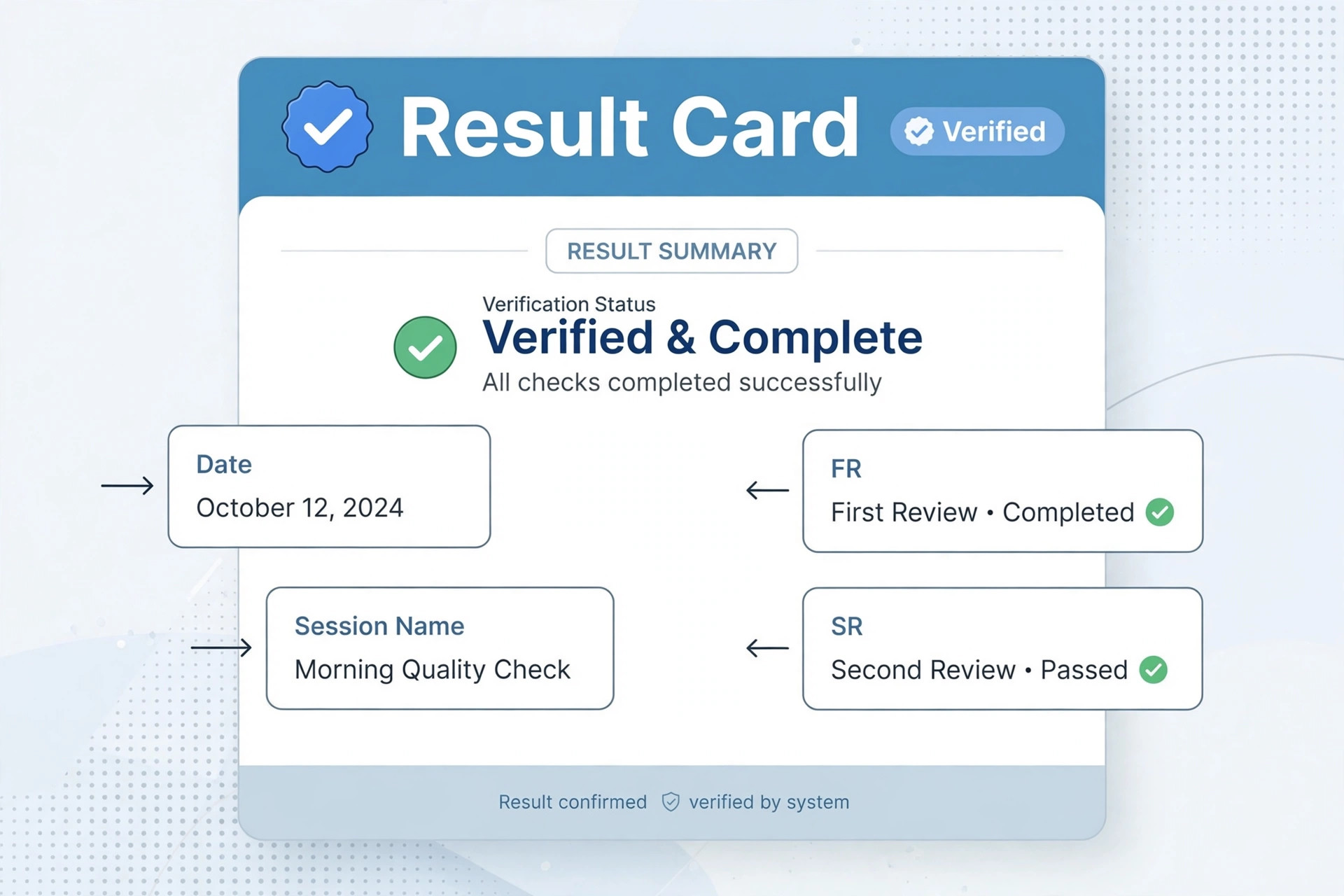
The page names the session unambiguously: Jowai Ladrymbai, not a vague “teer result” that could be any session. This matters because a day holds many sessions, Shillong, Juwai, Khanapara, Jowai Ladrymbai, and others, each with its own FR and SR. If you also follow the capital’s session, our Shillong teer result page keeps it on a separate, clearly labelled card, which is exactly how session separation should work.
Prominent date
Today’s date is visible on the result card, not buried in small print. You should be able to confirm “this is today’s card” in one glance. Pages that hide the date are pages that can show you yesterday’s numbers without you noticing.
Labelled rounds with honest status
FR and SR appear as separate, clearly labelled rows or sections. Each shows either the declared number or an honest pending status. There is no ambiguity about which number belongs to which round, and no invented number filling an undeclared slot.
A working archive
Reliable pages keep history. An archive of past Jowai Ladrymbai days, with dates and both rounds, shows the page is maintained continuously, and it gives you a reference to check your own records against. A page with no history is a page with no track record.
Clean separation from predictions
A trustworthy result page reports results. If it discusses anything else, predictions, tips, betting advice, it keeps that content clearly separate and labelled. The page you trust for numbers should never blur the line between what was declared and what someone guesses. This article, and our result pages, carry no prediction content at all.
Sensible site behaviour
The page loads reliably, does not impersonate another brand, and does not demand suspicious permissions or downloads to show you a number. A result is public information; any page that gates it behind strange requirements is not acting like a public information source.
The Verification Checklist – Your Sixty-Second Habit
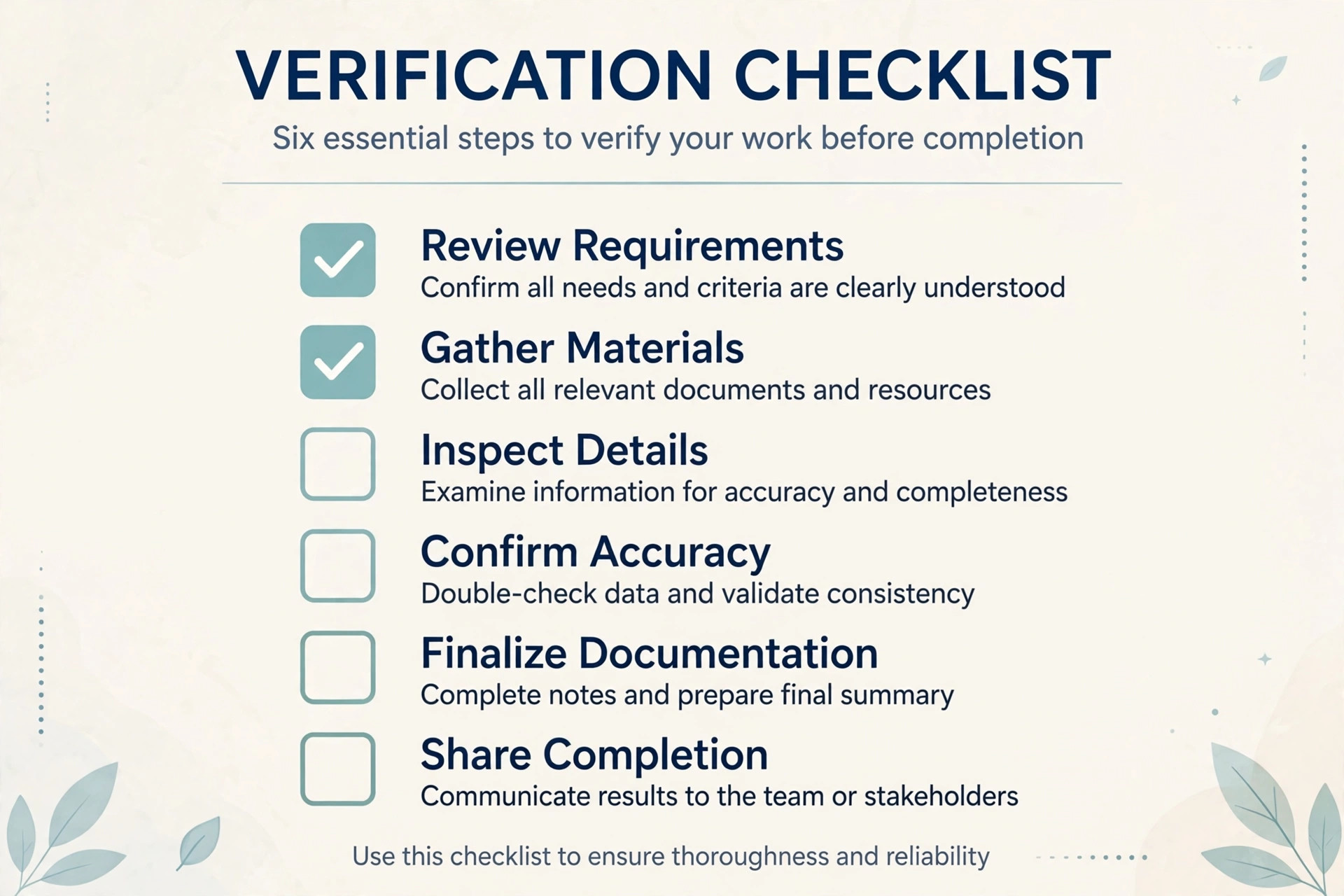
Here is the full routine in checklist form. Run it whenever you record a Jowai Ladrymbai result, and it becomes automatic within a week.
Step 1 – Confirm the session name on the card reads Jowai Ladrymbai. Step 2 – Confirm the date on the card is today. Step 3 – Confirm FR and SR are separately labelled. Step 4 – Read each number once from its correct row. Step 5 – Confirm the round you care about shows “declared” rather than “pending”; if it is pending, the result is not out yet. Step 6 – Cross-check with one second established source, especially when the number matters or anything looked unusual.
Six steps, about sixty seconds. Compare that with the cost of recording a wrong number: corrupted logs, confused archives, and decisions based on fiction. It is the cheapest insurance in teer.
Special Cases – Delays, Holidays, and Corrections
Trustworthy reading also means knowing how honest pages behave on unusual days.
Delays
Declarations sometimes run late: counting takes longer, a session starts behind schedule, local conditions intervene. An honest page shows the round as pending, possibly with a delay note. Your move is patience plus the checklist: wait, recheck the same trusted page, and confirm with a second source once the number lands. Never fill a delay with an unofficial number.
Holidays and suspensions
Sessions occasionally pause for local holidays or administrative reasons. On these days there is no result, and the honest page says so: holiday, suspended, or no session. Record “no result” in your log, not a number borrowed from another day or another session. A blank day is valid data.
Corrections
Rarely, an established page corrects a posted number after spotting its own error. This is a sign of honesty, not unreliability; the alternative is leaving a wrong number up forever. If you recorded the pre-correction number, update your log. This is another quiet argument for the archive habit: comparing your log against the archive occasionally surfaces exactly these cases.
The “jowai teer result today” search trap
Readers searching for today’s result often click the first promising link, which may be a stale page ranking well. The defence is the checklist: session name, date, labels, status. A stale page fails at step two, the date, within seconds. Never let search ranking substitute for verification.
Archives as a Trust Tool
A result archive is more than a history; it is a trust instrument. When a page maintains a consistent archive of past Jowai Ladrymbai results, with dates, FR and SR, and honest markers for holidays and delays, it demonstrates months of reliable publishing. You can also use archives to audit your own records: pick a past date, compare your log with the archive, and confirm they match. Occasional spot checks keep both your log and your confidence in the page healthy.
One caution: archives record the past; they do not predict the future. Each round’s number comes from its own archery, independent of all previous rounds. Use archives for verification and record-keeping, never as a basis for expecting any particular number. Our teer result list gives you the current day across all sessions, and the archives extend that view backwards.
A Note on Responsible Play
Accuracy and responsibility go together. Teer is a legal lottery in Meghalaya, for adults aged 18 and above only. Verifying your numbers carefully is part of playing responsibly: it keeps your records honest and your decisions grounded in fact rather than rumour. Set personal limits, never chase losses, and treat the result as information, not as a promise. If following the results ever stops being enjoyable, take a break. The sessions, and this guide, will be here when you return.

Frequently Asked Questions
How is the Jowai Ladrymbai teer result declared?
Through real archery. Archers shoot at a target, officials count the arrows that hit, and the result for the round is the last two digits of that count. FR is declared first, typically in the afternoon, and SR is declared later in the day after the second round. The declaration follows the counting and never precedes it.
What is the difference between an official and an unofficial result source?
The declaration itself is the origin. Established result pages publish the declared number directly and quickly, with session name, date, round labels, and honest pending states. Unofficial reposters, social accounts, messaging groups, and thin sites, copy from those pages, adding delay and the risk of typos, stale screenshots, or invented numbers. Get numbers from the shortest chain; use longer chains only for confirmation.
Why should I confirm the Jowai Ladrymbai result with two sources?
Because even good pages have occasional typos, caching glitches, or late updates. Checking two independent, established pages catches these errors. If both agree on the session, date, round, and number, you can record it confidently. If they disagree, wait and investigate rather than picking one.
How can I tell if a Jowai Ladrymbai result post is fake?
Look for the red flags: a number posted before the round’s archery could be complete, no date or a wrong date, missing FR and SR labels, predictions mixed in with results, a page that never shows a pending state, and urgent language like “100% sure” pressuring you to act. Any one of these is reason to disregard the post.
What does it mean when the result card says “pending”?
It means the round has not been declared yet. Pending is an honest, valid state, not a malfunction. Wait and check back later. Do not accept unofficial numbers during the pending window.
Can past Jowai Ladrymbai results predict future ones?
No. Each round’s result comes from that round’s archery, independent of every previous round. Archives are useful as records and for verifying your own log, but they cannot forecast future numbers. Treat anyone selling predictions based on past results with scepticism.
What should a reliable Jowai Ladrymbai result page include?
Clear session identification, a prominent current date, separately labelled FR and SR rows with honest declared or pending status, a working archive of past days, clean separation from any prediction content, and stable, sensible site behaviour. If a page meets all of these, it has earned a place in your bookmarks.
Conclusion
The jowai ladrymbai teer result is only as good as your trust in it, and trust is built, not assumed. Understand the declaration, favour the shortest source chain, confirm with two independent pages, learn the red flags, and run the sixty-second checklist before you record any number. Do that, and you will never again wonder whether the number on your screen is real. Keep Best Teer Result as your primary source, verify on the Jowai Ladrymbai teer result page, and scan the teer result list for the full day at a glance. Teer is a legal lottery in Meghalaya for adults aged 18 and above; play responsibly.