
Every morning the Khanapara Morning Teer result adds two new numbers to a growing history. Day after day, week after week, those numbers accumulate into an archive: a complete record of what the morning archery produced. Most readers glance only at today and move on, but the archive is worth understanding. It lets you verify a number you missed, settle debates about what was declared on a past date, and keep your own tidy log. This guide explains how the result archive works, how to look up any past date in seconds, how to maintain a personal log without errors, and, just as importantly, what the history cannot do for you.
The Archive: Your Record Book of the Khanapara Morning Teer Result
Think of the archive as the session’s diary. Each entry holds four facts: the date, the venue and session (Khanapara morning), the FR number, and the SR number. Nothing more is needed, because those four facts completely describe one morning’s outcome. The diary grows by one entry per day, in chronological order, with the newest day at the top for easy reading.
The archive exists on the Khanapara morning session page, where past days sit below the current result, and in fuller form on the teer result list, which gathers every session of every day in one place. Both views show the same underlying record; they differ only in layout. The session page is best when you care about one session’s history, while the result list is best when you want the whole day across all venues.
Why keep such a record at all? First, for verification. If someone quotes a number from last Tuesday, the archive settles it in seconds. Second, for completeness. Readers who missed a morning can catch up without guessing. Third, for the simple pleasure of a complete record. There is something satisfying about a diary with no missing pages, and the archive provides exactly that for the morning session.
How the Result List Is Organised
A well organised result list follows conventions that make scanning fast. Dates run newest first, so today is always at the top and you never have to hunt for it. Each date row carries the session label, so Khanapara morning numbers never sit anonymously beside Khanapara afternoon numbers. Within a session, FR comes before SR, mirroring the order the rounds were actually declared at the venue.

This organisation prevents the most damaging archive error: attributing a number to the wrong session. Because every number carries its session label and date, a careful reader can always say exactly which morning, which venue, and which round a number belongs to. When you quote a past number to someone, include all four facts. A bare two digit number with no context is meaningless; the same two digits could have appeared on many days in many sessions.
The list also handles the present gracefully. Early in the morning, before the day’s rounds are declared, the current date row may show dashes. Those dashes are honest placeholders meaning not yet declared. As FR and SR are confirmed, the dashes are replaced by the numbers. Watching a row fill in through the morning is the archive growing in real time.
What the History Shows
Browse a month of Khanapara morning history and a few patterns of the record itself become visible. You will see all one hundred possible two digit outcomes appearing across the weeks, because the format spans 00 to 99 and the archery produces varied counts. You will see that FR and SR numbers on the same day are usually different from each other, which is exactly what independence predicts: two separate contests rarely produce the same count. You will see no visible rhythm that repeats, because each round is a fresh event.
These observations about the record are interesting, but they must be read correctly. The history shows what happened, not what will happen. A number that appeared three times last week has no higher or lower chance this week. The archers shoot new arrows every round, and the count starts at zero every time. The archive is a diary, not a forecast. Readers who treat it as a forecast invariably mislead themselves, sometimes expensively.
There is one legitimate use of history beyond verification: understanding the game better. Seeing months of real declared numbers teaches you, better than any explanation, that the outcomes genuinely vary, that both rounds behave the same way, and that the morning session runs like clockwork day after day. That education builds well placed trust in the process.
Looking Up a Specific Past Date
Here is the three step method. Step one: open the result list or the session page. Step two: scan the dates from the top until you reach the date you want; dates are newest first, so recent dates need almost no scrolling. Step three: read across that date’s row to the Khanapara morning section and note the FR and SR numbers against their labels.

If the date you want is far in the past, keep scrolling; archives typically retain many weeks of history. If a particular day shows no entry, the session may not have been held or declared that day, which occasionally happens around major disruptions. A missing day in the archive is itself information: it tells you there is no official number to find, so no unofficial number should be trusted either.
When you share a past number with someone, send the full context: the date, the session name, and both round numbers. Better yet, send the link to the archive page itself. A link lets the other person verify directly instead of relying on your transcription, and it eliminates the telephone game of numbers changing as they are forwarded.
Another habit worth forming is to bookmark the archive page rather than relying on search results each time. Search listings can surface cached copies that lag behind the live page, while the bookmark always lands on the current record. If you look up past dates often, write the three step method on a small reference card in your notebook; it makes the process automatic within a week. Some readers also keep a running list of dates they have already confirmed, with a tick beside each, so they never repeat a lookup or mix up which date they verified. These small organisational habits turn occasional lookups into a smooth routine, and they cost nothing more than a minute of setup.
Keeping Your Own Morning Log
Some readers enjoy maintaining a personal log alongside the site archive. The cleanest format is one line per day: date, then FR, then SR, all labelled with the session name at the top of the page or notebook. For example, a line might read with the date followed by the two round numbers in order. Kept daily, this becomes a personal diary that mirrors the official archive.
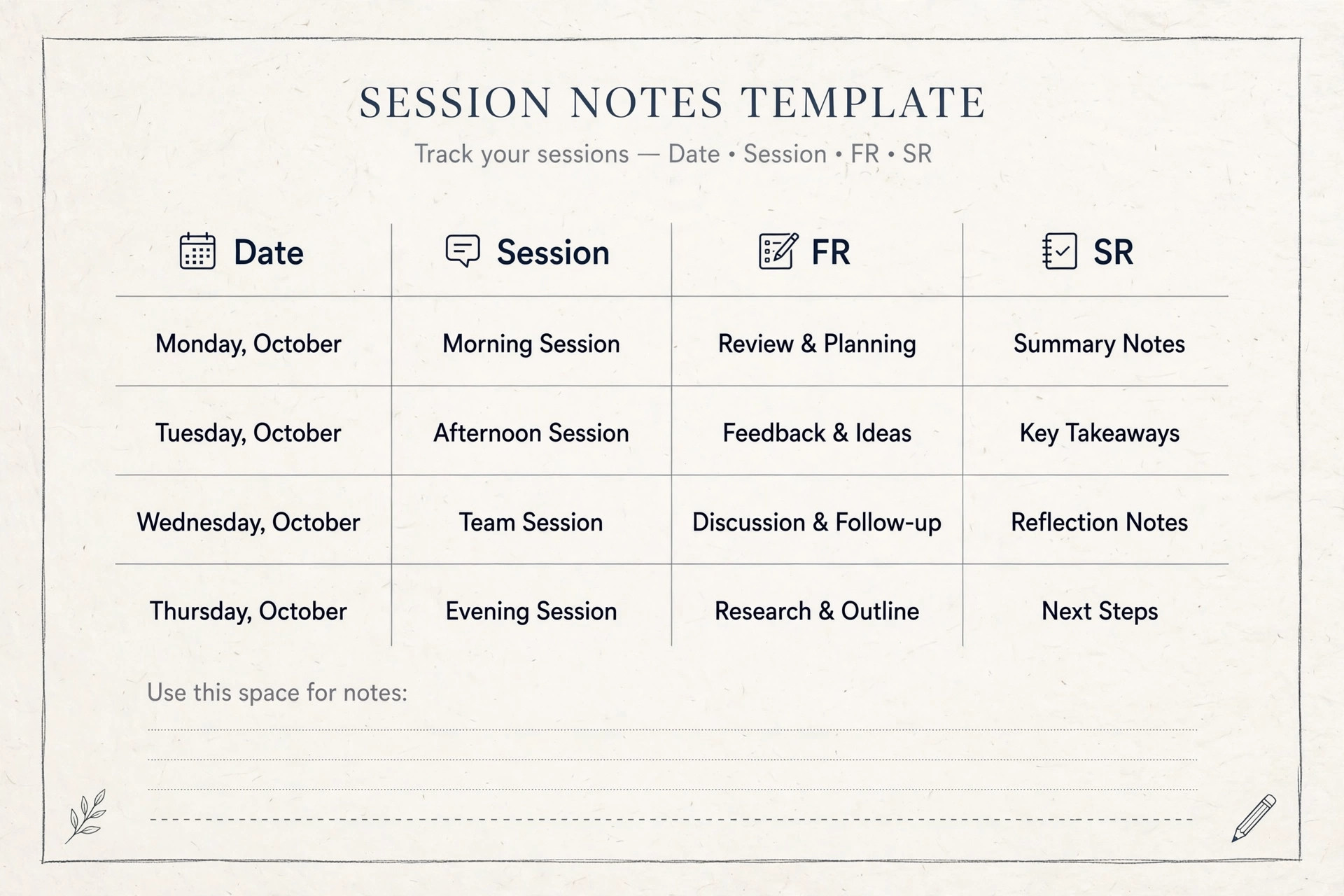
The discipline that makes a personal log valuable is labelling. Every line needs the date and the session. A notebook full of bare numbers, with no dates and no session names, is worse than useless; it is a confusion engine. With proper labels, your log becomes a quick reference you can check against the site archive any time, and discrepancies, which should never happen with careful logging, are easy to spot and fix.
Update your log at a fixed time each day, ideally after the SR number is declared around noon. A fixed time turns logging into a habit rather than a chore. If you miss a day, fill it from the archive the next morning rather than guessing. The archive is the authority; your log is the convenience copy.
Once a month, spend a few minutes comparing your log against the site archive, paying attention to dates when the session was not held. Mark those days clearly in your log with a note such as session not declared, so a blank line is never mistaken for a forgotten entry. Over a year these notes give your log a pleasant completeness: you can see at a glance every declared morning and every day the session rested. A log maintained this way becomes a personal keepsake of the year in teer, accurate because it was built one careful line at a time.
What Past Numbers Cannot Tell You
This section deserves emphasis because money is involved. Past Khanapara Morning Teer result numbers cannot predict future numbers. Each round is an independent archery contest. The arrows are shot anew, the count starts at zero, and no memory of previous counts carries forward. Statistically, every two digit outcome has the same chance in every round, regardless of what appeared yesterday or last month.
This means every system built on history, every pattern spotted in the archive, and every feeling that a number is due, is an illusion. The human brain is excellent at finding patterns, even in data that has none. Enjoy pattern spotting as a pastime if you like, the way people enjoy cloud shapes, but never spend money on it. The archive’s honest message is that the game is random within its format, and randomness does not owe anyone a pattern.
The responsible way to enjoy history is as a spectator’s pleasure: the completeness of the record, the rhythm of the daily entries, the knowledge that each number represents a real morning of archery. That enjoyment is free and never disappoints.
Monthly Reading Habits Worth Building
Once a month, spend a few minutes browsing the archive as a whole rather than hunting a single date. Notice the unbroken chain of daily entries, each morning accounted for. Notice how the FR and SR columns vary independently. This monthly overview builds an intuitive feel for the game that no single day can give: the steadiness of the schedule, the variety of outcomes, the sheer ordinariness of a well run lottery.
If you keep a personal log, the monthly review is when you reconcile it with the site archive. Scan your lines against the official record for the month. They should match exactly. This reconciliation is satisfying in the way balancing any account book is satisfying, and it keeps your log trustworthy for the months ahead.
Archive Mistakes to Avoid
The session mix up is the archive’s classic error: reading the Khanapara afternoon row while believing it is the morning row. The labels are there precisely to prevent this; use them every time. The date slip is next: quoting numbers from the wrong date because rows blur together when scrolling. Slow down at the date column. The transcription error is third: copying a number wrongly into your log or a message. Double check digits before sending; a single wrong digit creates a completely different number.

The most expensive mistake is the prediction fallacy described above: treating history as a guide to the future. The archive is a record book. Its job is to tell you what was declared, and it does that job perfectly. Asking it to tell you what will be declared is asking it to do a job it was never designed for, and the answer it seems to give is always a mirage.
The Morning Session in Context
The Khanapara morning archive is one thread in a larger tapestry. The same archival care covers the afternoon sessions at Juwai, Shillong and Khanapara, and the night sessions that close the day. Each has its own diary, its own rhythm, and its own independent numbers. The result list weaves them together by date, so one page can show you an entire day of teer across all venues. Readers who follow several sessions often find the combined view more convenient than visiting each session page separately.
Comparing Morning Archives Across Venues
Khanapara is not the only venue with a morning session, and comparing archives across venues teaches a useful lesson. Shillong and Juwai each run their own morning sessions with the same two round structure, and each keeps its own archive. Place the three archives side by side for any given week and you will notice two things. First, the declaration times differ slightly; Shillong and Juwai morning rounds are typically declared a little earlier than Khanapara’s. Second, and more importantly, the numbers are entirely independent. A glance across the venues on any single day shows different FR and SR figures at each, exactly as independence predicts.
This comparison is the clearest possible demonstration that sessions do not influence each other. If the venues were connected, their archives would move together. They do not. Each archive dances to its own archery. Readers who follow more than one morning session should keep separate logs for each venue, because merging them into one list destroys the very separation that makes each record meaningful. Label every line with its venue as well as its session and date.
The comparison also helps you choose which sessions to follow. Some readers prefer the earliest declaring venue so their morning routine finishes sooner. Others follow the venue nearest to them out of local interest; Khanapara’s proximity to Guwahati makes its archive especially popular with readers in Assam. There is no wrong choice. Every venue’s archive is equally complete and equally honest. Pick the sessions that fit your morning, keep their records apart, and enjoy the full picture the combined archives provide.
Play Responsibly
Teer is a legal lottery in Meghalaya under state regulation, for adults aged 18 and above. Following results and browsing the archive is free entertainment. If you participate by buying tickets, set a strict budget in advance, never borrow money to play, and treat it as entertainment spending. The archive will still be there tomorrow; make sure your finances are too. For background on the game, see Wikipedia.
Frequently Asked Questions
Where can I find old Khanapara Morning Teer results?
On the session page archive below the current result, and in fuller form on the site’s teer result list, which keeps past days for every session.
How far back does the archive go?
Archives typically retain many weeks of history. Scroll down the result list; dates run newest first.
What does a dash mean in the archive?
For the current day, a dash means the round has not been declared yet. For past days, a missing entry means no official number was declared that day.
Can past results predict future numbers?
No. Each round is an independent archery event. The archive is a record of what happened, not a guide to what will happen.
How should I keep a personal log?
One line per day with the date, the session name, and the FR and SR numbers in order. Update it daily after the second round is declared.
Is the morning archive separate from the afternoon archive?
Yes. Khanapara morning and afternoon are separate sessions with separate histories. Always check the session label.
What if the archive and someone’s message disagree?
Trust the archive. Messages and screenshots can be outdated or edited; the live archive page with its dates is the authority.
Can I download the archive?
The archive is browsed on the page rather than downloaded. For personal use, copying numbers into your own log with dates and session labels works just as well and keeps you in control of the format.
Is teer legal?
Teer is a legal lottery in Meghalaya under state regulation, for adults 18 and above. The state’s official portal is meghalaya.gov.in.
Conclusion
The Khanapara Morning Teer result archive is a complete, trustworthy diary of the morning session: every date, every FR, every SR, each in its labelled place. Use it to verify, to catch up, and to keep your own log honest. Respect what it cannot do, and never let history masquerade as prediction. With the archive understood, you hold the whole morning session, past and present, in one view. For the live numbers each day, the homepage brings all nine sessions together.