
Introduction – Why a Legal Game Still Needs Responsible Play
Meghalaya teer is one of the rare forms of betting in India that is fully legal, licensed, and regulated by a state government. Every day, thousands of adults across Meghalaya place small bets on the outcome of a traditional archery contest, and the results are declared openly in front of witnesses. Because the game is legal, many people assume it is completely risk free. That assumption is worth examining. Legality means the game is conducted honestly and openly, but it does not remove the personal responsibility of the player. Any game that involves money, even a legal one, can cause harm when it is played without limits, by people who should not be playing, or through unlicensed channels that sit outside the protection of the law.
This guide explains the player protection side of meghalaya teer. It covers the 18 plus age rule and why it exists, how the licensing system protects you, how to tell a licensed teer counter from an unlicensed seller, the most common frauds that target teer players, and practical steps for keeping your participation healthy. It also explains what to do if you or someone you know seems to be playing too much. Teer is a legal lottery in Meghalaya for adults aged 18 and above only, and this article is written for that adult audience. Play responsibly.
Why Meghalaya Teer Needs a Responsible Play Culture
The teer lottery meghalaya system works because of trust. Players trust that the archery contest is real, that the counting of arrows is supervised, that the result is declared honestly, and that winners are paid. The state licensing system exists to protect that trust. But trust in the system is only half of the equation. The other half is the behaviour of the players themselves.
Responsible play matters for three simple reasons. First, even small stakes add up over time, and a daily game makes it easy to spend more than you intended without noticing. Second, the excitement of a daily result can turn a casual habit into a compulsion for some people, especially when they start chasing losses. Third, the popularity of the game attracts fraudsters who exploit hopeful players with fake results and false promises. A responsible player is protected against all three risks: they spend within a budget, they treat the game as entertainment, and they never fall for scams that prey on desperation.
Understanding the legal framework helps here. When you know that the game is regulated, that counters are licensed, and that results are supervised, you stop needing to look for shortcuts. You play through the proper channels, you accept the official result, and you keep the game in its proper place in your life.
The 18 Plus Age Rule in Meghalaya Teer
One of the clearest player protection rules in the teer lottery meghalaya system is the minimum age requirement. Teer counters are meant to serve adults only. If you are under 18, you should not be placing bets, and no licensed counter should be selling tickets to you.
Why the Age Limit Exists
The 18 plus rule exists for the same reason that age limits apply to lotteries and other forms of betting everywhere in the world. Young people are still developing the judgment needed to handle financial risk, and early exposure to betting is strongly linked to problem gambling later in life. The rule also reflects a simple principle of consent: betting involves risking your own money, and society treats 18 as the age at which a person can take on that kind of financial responsibility.
Parents and guardians in Meghalaya have a role to play too. Because teer counters are part of everyday street life in towns like Shillong, Jowai, and Khanapara, young people see the game around them. It helps to explain to teenagers that teer is an adults only game, like other regulated activities, and that the age rule is there to protect them.
What the Rule Means in Practice
In practice, the age rule means that a responsible adult player should never place bets on behalf of a minor, and should never encourage a young person to participate. If you run a household, keep your teer tickets and any winnings out of the reach and sight of children, just as you would with any other adult financial activity. The 18 plus boundary is one of the simplest and most effective protections the system has, and it only works if adults respect it.
How Regulation Protects Meghalaya Teer Players
A common question is simply: is teer legal? The answer is yes, within Meghalaya, under a specific licensing framework. Teer betting in Meghalaya is licensed under Section 14A of the Meghalaya Amusements and Betting Tax (Amendment) Act, 1982, which provides for licensed bookmakers for arrow shooting and states that “arrow shooting” includes the game of teer. The Meghalaya Regulation of the Game of Arrow Shooting and the Sale of Teer Tickets Act, 2018 further regulates the game and the sale of teer tickets. The Meghalaya Prevention of Gambling Act, 1970 gives the state government the power to exempt notified games from the general prohibition on gambling. Teer is conducted under the aegis of the Khasi Hills Archery Sports Association, and the Law Commission of India (Report No. 276) discusses this legal framework in its examination of gambling law in India.
This matters to you as a player because regulation is what separates a fair game from a rigged one. Here is how the regulatory system protects you.
Licensed Counters Only
Teer tickets may only be sold through licensed counters. A licensed counter operates under the authority of the state framework, which means it is accountable. If a licensed counter refused to pay a genuine winner, the player would have a real avenue of complaint. An unlicensed seller, operating outside the system, offers no such protection. This is the single most important distinction in the whole game: always buy from a licensed counter.
Official Supervised Results
The results of meghalaya teer are not decided in a back room. The archery contest takes place in the open, the arrows are counted under supervision, and the declared number reflects the actual outcome of the shooting. The game format is straightforward: bettors choose a number from 0 to 99 representing the last two digits of the total number of arrows hitting the target. Two rounds per session are conducted, called the first round (FR) and the second round (SR). Because the result comes from a real, witnessed physical event, it cannot be quietly altered after the fact the way a purely digital draw could be. That physical, public character of the game is a built in protection against rigging.
Oversight by the Archery Association
Teer is conducted under the aegis of the Khasi Hills Archery Sports Association. This connects the betting side of the game to a genuine sporting tradition. Archery is a heritage sport of the Khasi people, and the association’s involvement means the shooting itself is run by people who treat it as a sport first. The betting is layered on top of a real contest, not the other way around. For the player, this is reassuring: the event you are betting on would happen with or without the betting.
How to Identify a Licensed Teer Counter
Knowing that you should use a licensed counter is one thing. Recognizing one on the street is another. Here are practical signs that separate a licensed teer counter from an unlicensed seller.
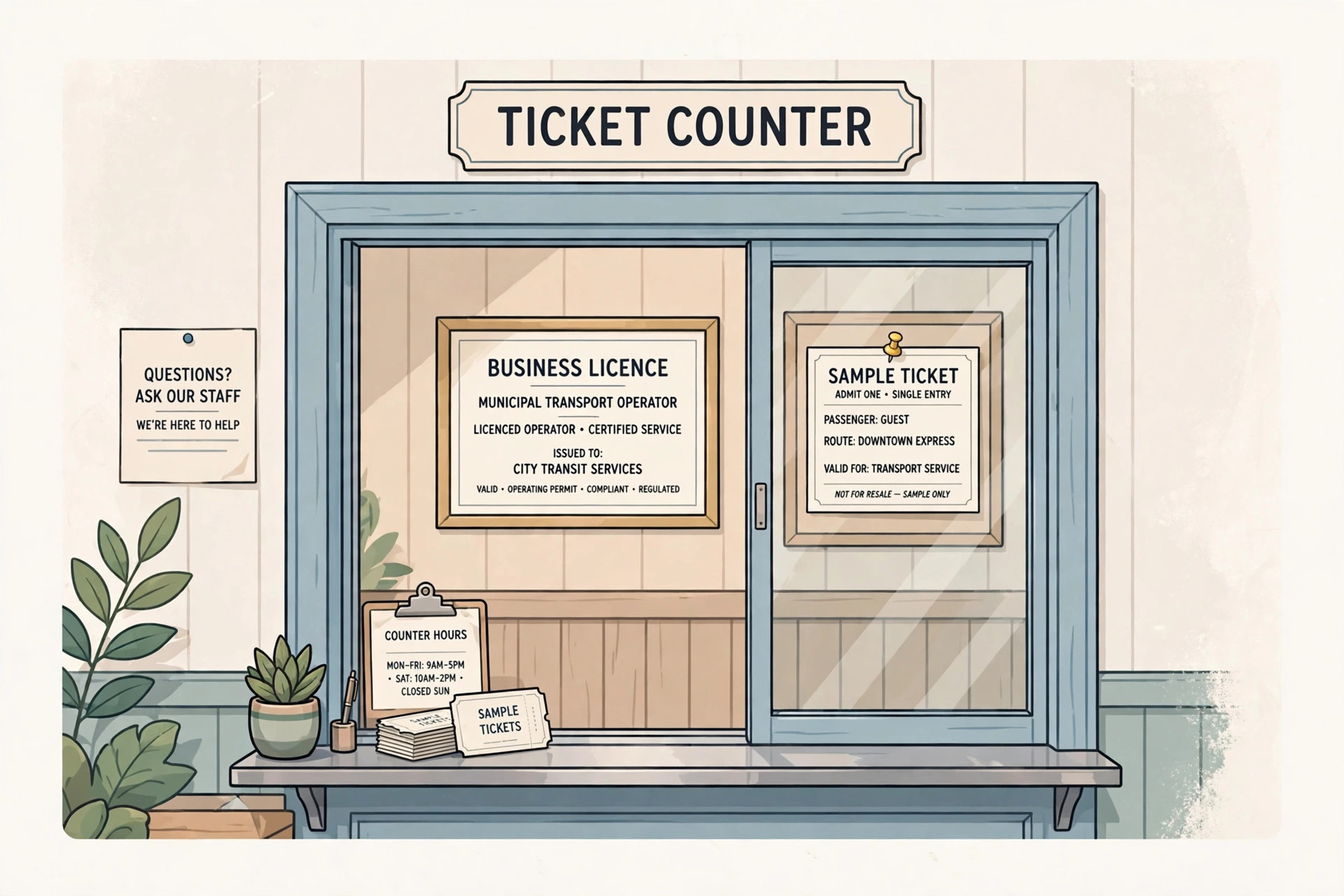
Step 1 – Look for displayed authorization. A licensed counter typically displays its licence or authorization certificate where customers can see it. If you cannot see any sign of authorization, ask. A genuine licensed operator will not be offended by the question.
Step 2 – Check for proper tickets. Licensed counters issue proper printed tickets showing your chosen number, the round (FR or SR), the date, and the stake. If someone takes your money and gives you nothing in writing, or only a scrap of paper with a number scribbled on it, walk away. Your ticket is your proof of participation and your only claim to a prize.
Step 3 – Observe the setup. Licensed counters operate from a fixed, recognizable location, often with signage. Be cautious of individuals who approach you on the street offering to take teer bets, who operate from temporary spots, or who ask you to pay through personal mobile payment accounts with no ticket issued.
Step 4 – Confirm the result source. A licensed counter’s result will match the officially declared result for that round. If a seller declares a different number from the official result, or cannot tell you where the official result is published, that is a serious warning sign.
Step 5 – Ask about payout terms. A licensed counter pays the teer prize as a fixed multiple of the stake, according to the terms set for that counter. The terms should be stated openly before you play. Vague promises, changing payout stories, or pressure to bet more to “unlock” better payouts are all red flags.
Common Frauds Every Teer Player Should Avoid
The honesty of the official game does not stop criminals from trying to profit from its popularity. Fraud around the meghalaya lottery takes several familiar forms. Knowing them in advance makes you nearly immune.
Fake Result Messages
One of the most common scams is the fake result message. You may receive an SMS, a WhatsApp forward, or see a social media post claiming to show “today’s teer result” before the official declaration, or showing a different number from the genuine one. These messages are designed to confuse players, sometimes to support a rigged private betting operation running alongside the real game. The rule is simple: trust only the officially declared result. Check the result through a reliable source you have used before, such as the result listings on Best Teer Result, and be deeply suspicious of any number that arrives through an unexpected message. Never pay anyone who claims they can give you the result “in advance”. Nobody can, because the result does not exist until the arrows are shot and counted.
People Selling “Sure Numbers”
Perhaps the most damaging fraud is the sale of so called sure numbers, common numbers, or hit numbers. Someone, often online or through messaging apps, claims to know tomorrow’s winning number and offers to sell it to you, sometimes for an upfront fee and sometimes for a share of the supposed winnings. This is always a scam. The result of a teer round is determined by a live archery contest. No one can know it in advance, and anyone claiming otherwise is lying to take your money. A frequent variation is the “free trial” trick: the scammer sends free numbers to hundreds of people, each group getting a different number, so that one group inevitably wins and believes the scammer has genuine insight. That group is then charged for the next “sure” number, which is no better than a guess. There is no number picking strategy that beats a random physical event, and this site never publishes prediction content of any kind.
Advance Fee Scams
A related fraud asks for an advance fee before you can collect a supposed prize. You might be told you have won a teer prize and need to pay a “processing fee”, “tax”, or “release charge” before the money is sent. Genuine teer prizes are claimed at the counter where the ticket was bought, on presentation of the winning ticket. No legitimate operator asks winners to pay upfront fees through mobile transfers to strangers. Any request of this kind is a scam, and you should stop communicating immediately.
Impersonation of Officials and Associations
Some fraudsters claim to work for the archery association, the government, or a well known result website, using the name to seem trustworthy. Real officials do not sell numbers, do not collect bets through personal accounts, and do not contact players with special offers. Treat any such contact as fraudulent.

Setting Personal Limits – The Core of Responsible Play
Regulation protects the honesty of the game, but only you can protect your wallet. Setting personal limits is the most practical responsible play skill, and it works for any form of entertainment spending.
Step 1 – Set a budget. Decide in advance how much you can comfortably spend on teer in a week, treating it exactly like any other entertainment expense, such as cinema tickets or eating out. The amount should be small enough that losing all of it would not affect your rent, food, savings, or family obligations. Write the number down. A budget that exists only in your head is easy to renegotiate with yourself.
Step 2 – Separate teer money from essential money. Never use money meant for household expenses, school fees, loan repayments, or medical needs for betting. If you find yourself reaching into essential funds, that is the clearest possible signal to stop and reassess.
Step 3 – Set a time limit as well as a money limit. Decide how much of your day the game gets. Checking results constantly, discussing numbers for hours, or letting teer dominate your conversations are signs the game is taking up more mental space than a pastime should.
Step 4 – Never chase losses. This is the golden rule. If your numbers do not come up, accept the loss as the price of entertainment and walk away. Increasing your stake to “win it back” is how small losses become large ones. The archery contest does not know or care what you lost yesterday; each round is independent, and no amount of extra betting changes that.
Step 5 – Review your spending honestly once a month. Add up what you spent on teer over the past month and compare it with your original budget. Most people are surprised by the total, because small daily amounts are nearly invisible. An honest monthly review keeps the habit in proportion.
Treating Teer as Entertainment, Not Income
The healthiest mindset for any lottery player is to treat the game as paid entertainment. You pay a small amount for the excitement of following the contest and checking the result, in the same way you might pay for a film. Sometimes the entertainment comes with a prize, and that is a pleasant bonus, not the plan.
This mindset protects you in several ways. It stops you from betting money you cannot afford to lose, because nobody spends rent money on cinema tickets. It stops you from feeling angry or desperate after a loss, because a disappointing film does not ruin your week either. And it makes you immune to anyone promising that teer can be a source of income, because you already know it is not one.
Warning signs that the entertainment mindset is slipping include borrowing money to play, hiding your betting from family members, feeling restless or irritable on days you do not play, and thinking of teer as a way to solve financial problems. If you recognize any of these in yourself, take it seriously and read the next section.
What to Do If You or Someone You Know Plays Too Much
Problem gambling can affect anyone, and recognizing it early makes it far easier to address. There is no shame in seeking help; the shame would be in ignoring a problem that is harming you or your family.
If you are concerned about your own play, start with a break. Stop playing entirely for a fixed period, such as a month, and notice how you feel. If staying away feels very difficult, that difficulty is itself useful information. Talk to someone you trust about what is happening. Many people find that simply saying the problem out loud to a friend or family member breaks the secrecy that keeps it going. Consider asking a trusted person to help you stay accountable during your break.
If you are concerned about someone else, approach them with care rather than confrontation. Accusations and ultimatums usually make people defensive and secretive. Instead, describe what you have observed and how it affects you, using calm and specific language. For example, mention the money you have noticed going missing, or the time spent away from family, rather than labelling the person. Offer to help them take a break or to go with them to seek advice. Be prepared that they may not accept help immediately; planting the thought matters even if change takes time.
In India, support for gambling related problems is available through general mental health services. You can speak to a counsellor or psychiatrist through your local hospital or a mental health helpline, and describe the situation honestly. Problem gambling is a recognized behavioural health issue, and professionals know how to help. If financial damage has already occurred, consider speaking to a trusted adviser about managing debts before they grow.
One practical step that helps many people is self exclusion in the informal sense: tell your regular counter that you are taking a break and ask them not to sell to you for a while, remove result checking apps and bookmarks from your phone, and fill the time the game used to occupy with another activity. You can also read our background information on the Best Teer Result about page to remind yourself what this site stands for: honest results, not encouragement to bet more.

The Legal Framework in Brief
For readers who want the legal picture in one place, here is a short recap of the teer rules that make the game lawful in Meghalaya.
The foundation is the Meghalaya Amusements and Betting Tax (Amendment) Act, 1982. Section 14A of this Act provides for licensed bookmakers for arrow shooting and expressly states that “arrow shooting” includes the game of teer. This is the provision that brings teer betting inside the licensed system rather than leaving it in the shadows. You can read the text of this Act on the official Meghalaya state portal in this PDF of the Meghalaya Amusements and Betting Tax (Amendment) Act, 1982.
Building on that foundation, the Meghalaya Regulation of the Game of Arrow Shooting and the Sale of Teer Tickets Act, 2018 further regulates how the game is organized and how teer tickets are sold. Together, these laws create the licensing regime: who may organize the shooting, who may sell tickets, and under what conditions.
The wider context comes from the Meghalaya Prevention of Gambling Act, 1970, which generally prohibits gambling in the state but allows the government to exempt notified games. Teer operates within this exemption structure, which is why it is legal in Meghalaya even though unlicensed gambling remains an offence.
At the national level, the Law Commission of India examined this framework in its Report No. 276 on the legal framework for gambling and sports betting in India. The report’s Meghalaya section discusses how the state’s approach works. You can read it in the Law Commission of India Report No. 276, Meghalaya section.
A final note on the teer prize: prizes are paid as a fixed multiple of the stake, with the exact terms set by the licensed counter. Because terms can vary between counters, always confirm the payout terms before you play, and treat any counter that will not state its terms clearly as one to avoid.
Frequently Asked Questions
Is teer legal in Meghalaya?
Yes. Teer is legal in Meghalaya when it is conducted through the licensed system. Teer betting is licensed under Section 14A of the Meghalaya Amusements and Betting Tax (Amendment) Act, 1982, which covers licensed bookmakers for arrow shooting and states that “arrow shooting” includes the game of teer. The Meghalaya Regulation of the Game of Arrow Shooting and the Sale of Teer Tickets Act, 2018 further regulates the game and ticket sales. Betting through unlicensed sellers, however, is not protected by this framework and should be avoided.
What is the legal age for playing teer?
Teer is for adults aged 18 and above only. Licensed counters should not sell tickets to minors, and adults should never place bets on behalf of young people or encourage them to participate. The age rule exists because betting involves financial risk that young people are not equipped to handle.
How do I know my teer counter is licensed?
Look for a displayed licence or authorization certificate, a fixed and recognizable location, and proper printed tickets showing your number, the round, the date, and the stake. Be cautious of street touts, sellers who issue no ticket, and anyone asking for payment to personal accounts. When in doubt, ask the operator directly about their licence; a genuine operator will answer plainly.
Can anyone predict the winning teer number?
No. The result is decided by a live archery contest, with bettors choosing a number from 0 to 99 representing the last two digits of the total arrows hitting the target. Nobody can know the outcome before the shooting happens. Anyone selling “sure numbers”, “common numbers”, or advance results is running a scam. This site publishes results only and never offers predictions.
What should I do if I receive a message claiming I won a teer prize I did not play for?
Delete it and do not respond. Genuine teer prizes are claimed at the counter where the ticket was purchased, on presentation of the winning ticket. Any message asking you to pay a fee to release a prize is an advance fee scam. Do not send money and do not share personal or banking details.
Where can I get help if teer is becoming a problem for me or my family?
Start by taking a complete break from playing and talking honestly to someone you trust. For professional support, speak to a counsellor or psychiatrist through your local hospital or a mental health helpline in India, and describe the situation openly. Problem gambling is a recognized behavioural health issue, and help is available. If you need to reach this site for any reason, you can use our contact page.
Where can I check the daily teer results safely?
Use a result source you trust that publishes the officially declared numbers without asking for money or personal details. Our teer result list carries the declared results for each round, updated daily. Never trust result numbers that arrive through unexpected messages or from sellers.
Conclusion – Keep the Game Honest by Keeping Your Play Healthy
Meghalaya teer is a rare thing: a traditional game, rooted in the archery heritage of the Khasi people, that the law has brought into the open instead of driving underground. The licensing system, the supervised public contest, and the oversight of the Khasi Hills Archery Sports Association together make it one of the fairest betting games a person can participate in. That fairness is worth protecting, and every player has a part in protecting it.
Your part is straightforward. Play only if you are 18 or older. Buy only from licensed counters that issue proper tickets. Never trust anyone selling sure numbers or advance results. Set a budget, treat the game as entertainment, and never chase losses. And if the game ever stops being fun, have the honesty to step back and the courage to ask for help.
Teer is a legal lottery in Meghalaya for adults 18 plus only. Play responsibly, keep it small, keep it honest, and let the game remain what it was meant to be: a celebration of skill with arrows, shared openly with the community.