If you are brand new to teer and keep hearing people say things like “the teer result time for Shillong FR is 3:45 PM,” this guide is written exactly for you. Nobody is born knowing what FR means, why there are two rounds, or why everyone keeps saying “IST” after every timing. This beginner’s guide explains every part of teer timing slowly, in simple words, so that by the end you can read any teer schedule with confidence and know exactly when to check results and what to expect.
What Is Teer Result Time – A Beginner’s Starting Point
Let us begin with the simplest possible definition. Teer result time is the moment of the day when the winning number of a teer game is announced. Teer is a traditional archery-based lottery game played in Meghalaya, India, and its results are declared at fixed times throughout the day, from Monday to Saturday. When people talk about teer result timing, they are really asking one question: “What time will today’s result be announced?”
Why beginners find teer timings confusing
The confusion is completely normal. Most newcomers trip over three things at once. First, there is not one single teer game. There are several “markets” or venues, each with its own schedule, such as Shillong teer, Juwai teer, Khanapara teer, and a few others. Second, every market declares its result twice a day, in two rounds called FR and SR. Third, every time is written in IST, a time zone many beginners have never needed to think about. Once you understand these three building blocks, the whole system clicks into place.
The three words you must learn first
Think of teer timing like a train timetable. Just as a train timetable has stations, departures, and arrivals, a teer schedule has three key ideas.
Session means a time slot of the day. Teer has morning sessions, afternoon sessions, and night sessions. A session is simply a block of time during which one market plays and declares its results.
Round means one of the two result announcements inside a session. FR stands for First Round and SR stands for Second Round. Every session produces two results, one for FR and one for SR.
IST stands for Indian Standard Time. It is the time zone used across all of India, including Meghalaya. Every teer result time you see on any website is in IST unless it clearly says otherwise.
Hold onto those three words. Everything else in this guide is just detail built on top of them.
Teer Result Time and the Two Rounds – What FR and SR Mean
This is the part that confuses almost every beginner, so let us take it slowly. Why does teer have two rounds? Why not just one result and be done with it? The answer is simple: that is how the game was designed. In each session, archers shoot at a target twice, with a break in between, and each shooting produces its own result. That is the entire reason two rounds exist. It is not a trick, and it is not a complication. It is just the shape of the game.
What FR (First Round) means
FR stands for First Round. It is the first result announced in a session. When someone says “Shillong teer FR result,” they mean the number declared at the start of the afternoon Shillong session, usually around 3:45 PM. If you are following only one round, FR is the natural one to start with, because it is announced first. On the Best Teer Result homepage, the FR result card for each session is always the first one you will see.
What SR (Second Round) means
SR stands for Second Round. It is the second result announced in the same session, usually about one hour after FR. For example, after the Shillong FR result is announced around 3:45 PM, the Shillong SR result follows at around 4:45 PM. The two rounds are separate announcements with separate results. Knowing one result does not tell you the other.
Why two rounds exist instead of one
You might wonder why the game does not just have one round. The tradition comes from the physical game itself. In real teer play, archers gather at the archery ground and shoot arrows at a target in two separate rounds. The first round of shooting gives the FR result. Then there is a pause, the archers rest and prepare, and the second round of shooting gives the SR result. The two-round structure is a direct reflection of the real-world event. Once you picture real archers on a ground shooting twice, the FR and SR system feels completely natural.
How FR and SR appear on a result card
When you open a teer result website, each session is usually shown as a small card with the session name at the top and two rows or two boxes underneath, one labeled FR and one labeled SR. Each box shows the time of that round and, once declared, the result itself. Before the result is announced, the box may show a waiting message or a placeholder dash. After declaration, the number appears in the box. Learning to read these cards is one of the most useful beginner skills, and we will practice it later in this guide.

What Is IST and Why Every Teer Result Time Uses It
IST stands for Indian Standard Time. It is the official time zone of India, and it is 5 hours and 30 minutes ahead of Coordinated Universal Time (UTC plus 5:30). Teer is played in Meghalaya, which is a state in northeastern India, so every teer result time is announced in Indian Standard Time. This is why every trustworthy teer website writes “IST” after its timings.
IST in one simple sentence
If your own clock matches Indian time, then a result announced at “3:45 PM IST” happens at 3:45 PM on your clock. If you live somewhere else, you need to convert. For example, a reader in Dubai is 1 hour and 30 minutes behind IST, so a 3:45 PM IST result is announced at 2:15 PM Dubai time. A reader in London during winter is 5 hours and 30 minutes behind IST, so the same result appears at 10:15 AM London time.
What this means for you as a reader
The practical rule is very easy. Always assume every teer timing is in IST. Never assume a website has converted the time into your local time for you. If you are outside India, keep a simple conversion in mind or set a world clock on your phone for IST. That one habit removes almost all timing mix-ups. When in doubt, check the full teer result list on this site, where each session’s results are shown against their IST declaration times.
Teer Result Time Today – Morning, Afternoon and Night Sessions in Plain Language
Now we reach the heart of the schedule. On any game day, which is Monday to Saturday, teer results are announced across three parts of the day: morning, afternoon, and night. Think of it as three separate programs running at different times, each with its own set of markets. You do not need to follow all of them. Most people follow one or two sessions that suit their daily routine.
Morning sessions
Morning sessions are the first games of the day. They are popular with early risers and with people who like to get the day’s teer activity done early.
- Shillong Morning teer time: FR usually around 10:30 AM, SR usually around 11:30 AM. This is one of the earliest sessions of the day.
- Juwai morning teer time: FR usually around 10:30 to 10:40 AM, SR usually around 11:30 to 11:40 AM. It runs almost side by side with the Shillong morning session.
- Khanapara morning teer time: FR usually around 11:00 AM, SR usually around 12:00 PM. It starts a little later than the other morning sessions.
Notice how the morning sessions cluster between about 10:30 AM and noon. If you check results once late in the morning, you will usually find all three morning sessions declared.
Afternoon sessions
The afternoon is the busiest part of the teer day. Several markets declare results in a tight window, and this is when most teer followers are most active.
- Juwai teer time: FR usually around 2:30 PM, SR usually around 3:00 to 3:10 PM. Juwai’s afternoon session is the first of the afternoon block.
- Shillong teer time: FR usually around 3:45 PM, SR usually around 4:45 PM. This is the most famous teer session, the one most people mean when they simply say “teer result.” The Shillong teer result page shows these two results every game day.
- Khanapara teer time: FR usually around 4:10 to 4:20 PM, SR usually around 4:45 to 4:50 PM. Khanapara’s afternoon session overlaps with Shillong’s, so results arrive close together.
- Jowai and Ladrymbai teer time: FR usually around 4:45 PM, SR usually around 4:50 PM. These are smaller regional sessions that declare late in the afternoon.
The afternoon window from about 2:30 PM to 5:00 PM is the most result-packed stretch of the day. If you can only check teer twice a day, once in the morning and once around 5:00 PM, you will catch nearly every session.
Night sessions
Night sessions are the last games of the day. They suit people who follow teer after work or in the evening.
- Shillong Night teer time: FR usually around 8:30 PM, SR usually around 9:30 PM.
- Night teer time: FR usually around 8:30 PM, SR usually around 9:30 PM. This session mirrors the Shillong night timing.
By about 9:30 PM, the teer day is over. After that, result websites update their archives and prepare for the next day.
Sunday is the weekly holiday
One important beginner fact: teer is not played on Sundays. Sunday is the weekly holiday for all sessions, morning, afternoon, and night alike. If you open a teer website on a Sunday and see no new results, nothing is wrong. The game simply rests, and the next game day is Monday. This is one of the most common beginner worries, so remember it early: no Sunday results is completely normal.
How to Read a Teer Result Timing Table
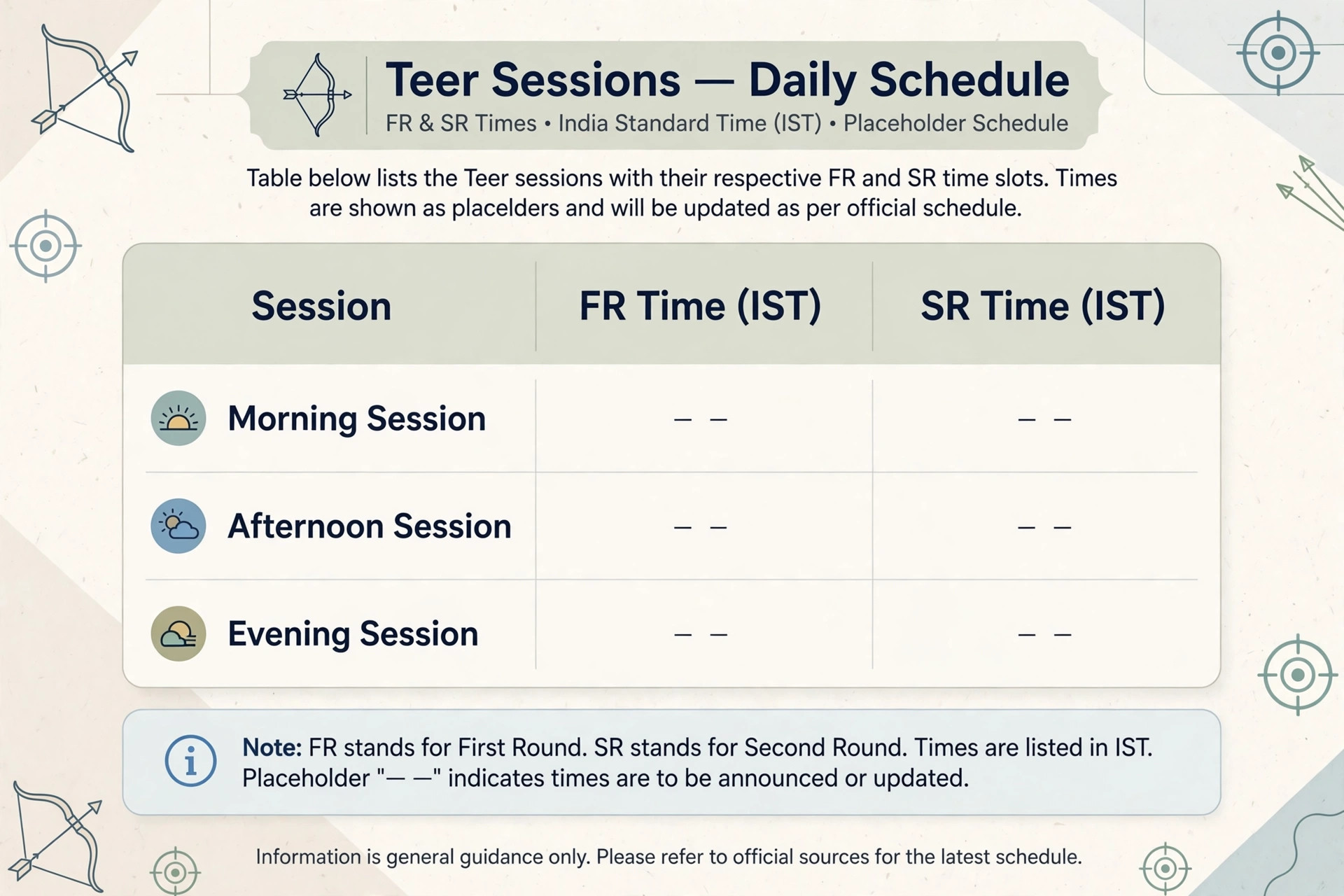
A timing table is simply a neat list of every session with its FR and SR times. Once you know how to read one, you can use any teer schedule anywhere. Let us look at a typical daily table and then walk through it line by line. Remember that all times below are typical and approximate, written in IST, for game days Monday to Saturday.
| Session | FR (typical) | SR (typical) |
|---|---|---|
| Shillong Morning | around 10:30 AM | around 11:30 AM |
| Juwai Morning | around 10:30 to 10:40 AM | around 11:30 to 11:40 AM |
| Khanapara Morning | around 11:00 AM | around 12:00 PM |
| Juwai (afternoon) | around 2:30 PM | around 3:00 to 3:10 PM |
| Shillong (afternoon) | around 3:45 PM | around 4:45 PM |
| Khanapara (afternoon) | around 4:10 to 4:20 PM | around 4:45 to 4:50 PM |
| Jowai and Ladrymbai | around 4:45 PM | around 4:50 PM |
| Shillong Night | around 8:30 PM | around 9:30 PM |
| Night | around 8:30 PM | around 9:30 PM |
A step by step reading walkthrough
Let us read this table together, slowly. Pick any row, for example “Shillong (afternoon).” The row gives you two pieces of information: the FR result for Shillong’s afternoon session is typically declared around 3:45 PM, and the SR result follows around 4:45 PM. That is all the row is saying. Now pick “Juwai Morning.” FR around 10:30 to 10:40 AM, SR around 11:30 to 11:40 AM. Same idea, different session.
Now read down the FR column from top to bottom. You will see the day unfold in order: morning FR results first, then afternoon FR results, then night FR results. The SR column works the same way. This is the skill that matters most: any timing table, on any website, follows this exact pattern. Session name on the left, first round time in the middle, second round time on the right.
What “usually around 3:45 PM” means in practice
Beginners often read “usually around 3:45 PM” as a promise that the result will appear at exactly 3:45 PM. In practice, it means the declaration happens at approximately that time. Teer is a physical event. Archers shoot, officials count, and results are announced when everything is verified. Most days the announcement lands within a few minutes of the usual time, but small delays happen. A result might be declared at 3:48 PM one day and at 3:42 PM another day. Both are perfectly normal.
So what should you do? Use the typical time as your guide, and check the live result cards on this site for the exact declaration. If the result is a few minutes late, wait calmly. Short delays are part of the game, not a sign that something is wrong. Only if a result is very late, for example more than an hour past its usual time, is it worth looking for an announcement about a delay.
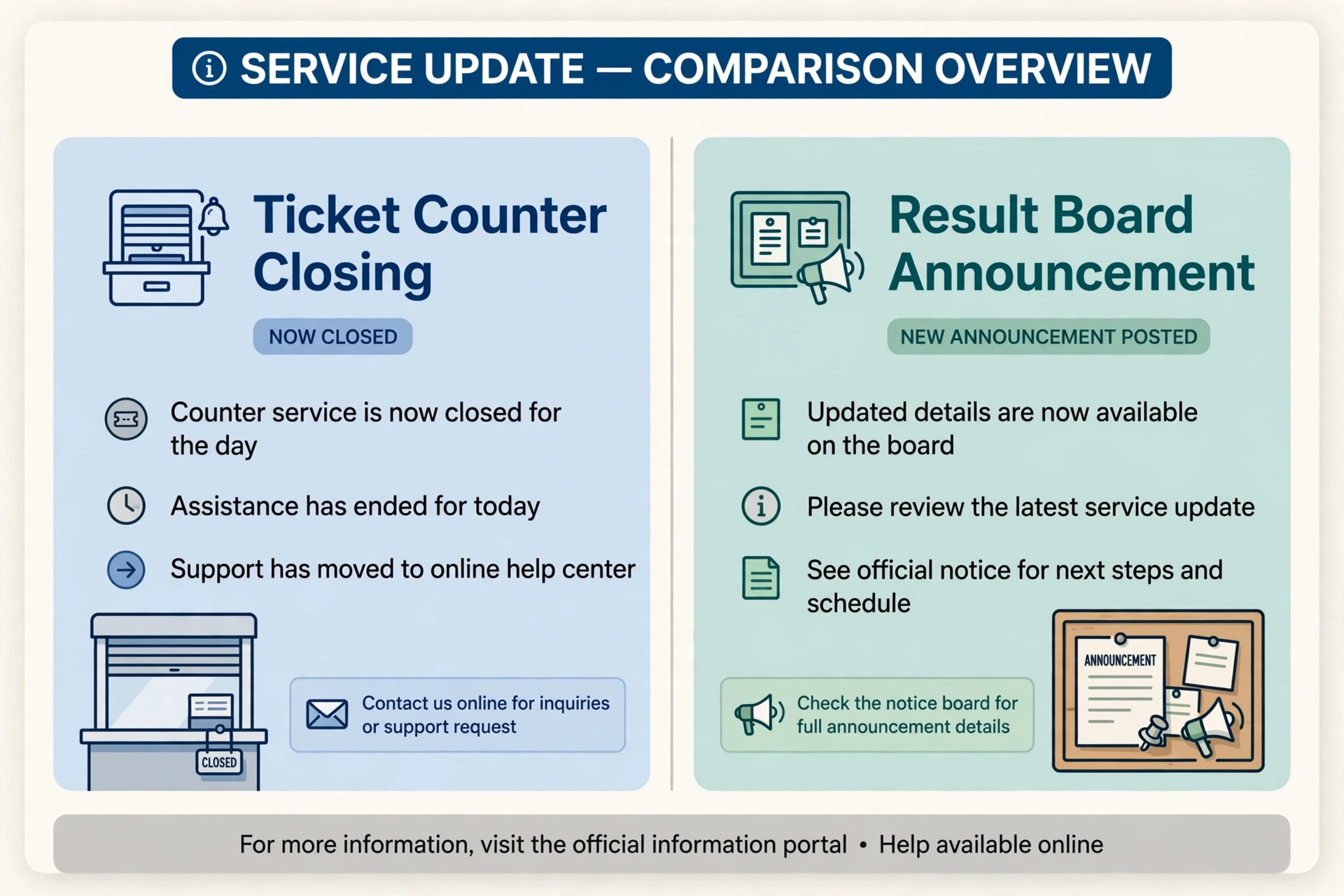
Ticket Sale Closing Time vs Teer Result Time – Two Different Moments
This distinction trips up more beginners than any other. There are two different “times” in teer, and they are not the same thing. The first is the ticket sale closing time. The second is the teer result time, also called the declaration time. Mixing them up leads to the most common beginner mistake of all, so let us make the difference crystal clear.
What ticket sale closing time means
Ticket sale closing time is the last moment you can buy a ticket for a round. Teer tickets are sold at licensed counters, and sales must stop before the round begins so that everything can be organized fairly. Each round has its own closing time, and it always comes before the result is declared. If you arrive after the sale has closed, you cannot buy a ticket for that round, even though the result has not been announced yet.
What result declaration time means
Result declaration time, which is what people usually mean when they say teer result time, is the moment the winning number is announced to the public. This happens after the round’s archery shooting is finished and the result has been verified. All the typical times in this guide, like Shillong FR at around 3:45 PM, are declaration times, not sale closing times.
The gap between the two, explained
Here is the simple picture. First, ticket sales close. Then there is a waiting period while the round takes place. Then the result is declared. The gap between sale closing and declaration exists because the game itself needs time to happen. Think of it like a cinema: the ticket counter closes before the movie starts, and the movie ending, when you finally learn the story, comes much later. Nobody confuses the counter closing time with the ending time of the film, and in the same way, you should never confuse ticket sale closing with result declaration.
Why does this matter for you? If you ever play teer at a counter, remember that being “on time for the result” does not mean you can still buy a ticket. By the time the result is announced, sales for that round closed long ago. Always ask at the counter when sales close for the round you want, and treat that as your real deadline.
Your First Full Day – A Teer Result Time Walkthrough
Let us now put everything together with a gentle walkthrough of one full teer day, from morning to night. Imagine you are a first-timer and you want to follow the rhythm of the day. Here is what the day looks like.
Step 1 – Morning: check the morning sessions
Your teer day can begin around 10:30 AM. This is when the Shillong Morning and Juwai Morning FR results are typically declared. By about 11:30 AM to 11:40 AM, their SR results usually follow, and the Khanapara Morning session, with FR at around 11:00 AM and SR at around 12:00 PM, completes the morning block. A quick check around noon shows you the full morning picture: three sessions, six results, all declared.
Step 2 – Midday: the quiet hours
Between roughly 12:00 PM and 2:30 PM, there is a calm stretch with no new results. This is a good time to take a break. Nothing is delayed and nothing is wrong. The game simply pauses between the morning and afternoon programs. Many experienced followers use this quiet window for lunch and return in the afternoon.
Step 3 – Afternoon: the busiest window
At around 2:30 PM, the Juwai afternoon session opens the busy part of the day with its FR result, followed by its SR at around 3:00 to 3:10 PM. Then comes the most watched moment of the day: Shillong FR at around 3:45 PM. Its SR follows at around 4:45 PM. In the same window, Khanapara’s afternoon results arrive, FR at around 4:10 to 4:20 PM and SR at around 4:45 to 4:50 PM, along with the Jowai and Ladrymbai results at around 4:45 PM and 4:50 PM. Between 2:30 PM and 5:00 PM, results arrive almost continuously. If you check once at 5:00 PM, you will see the whole afternoon story at a glance.
Step 4 – Evening: a short breather
From about 5:00 PM to 8:30 PM, the day quiets down again. The afternoon sessions are fully declared, and the night sessions have not started. Like the midday pause, this evening gap is a normal part of the schedule.
Step 5 – Night: the final session
At around 8:30 PM, the Shillong Night and Night sessions declare their FR results, with SR results following at around 9:30 PM. Once these are announced, the teer day is complete. Tomorrow, on the next game day, the same rhythm begins again at 10:30 AM. Congratulations: you now understand the full daily cycle of teer result time, from the first morning FR to the last night SR.
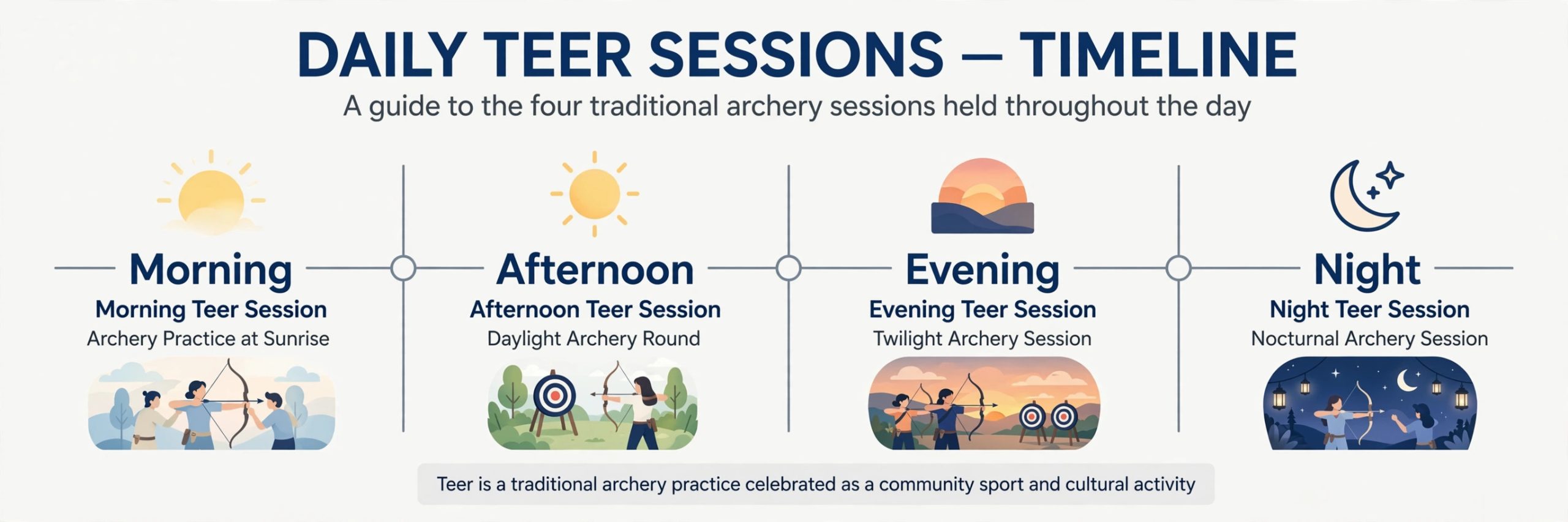
Common Teer Timing Mistakes Beginners Make
Even with a good guide, beginners tend to make the same handful of mistakes. Here they are, so you can skip them entirely.
Mistake 1 – Mixing up sale closing and declaration
This is the classic error. A newcomer hears “Shillong FR is 3:45 PM” and thinks they can buy a ticket at 3:30 PM. In reality, sales for that round closed well before the declaration time. Always separate the two ideas in your mind: closing time is for buying, declaration time is for results.
Mistake 2 – Forgetting about IST
If you are outside India and you forget that every timing is in IST, you will check for results at the wrong hour and think they are delayed. Keep an IST clock on your phone until the conversion becomes second nature. This one habit prevents a surprising amount of confusion.
Mistake 3 – Checking on Sunday and panicking
Every week, some beginner opens a teer website on a Sunday, sees no fresh results, and worries that the site is broken. It is not broken. Sunday is the weekly holiday. The next results will appear on Monday morning.
Mistake 4 – Treating approximate times as exact promises
“Usually around 3:45 PM” is a guide, not a contract. A result declared at 3:50 PM is not late in any meaningful sense. Give each session a comfortable window of about 15 to 30 minutes before you start wondering about a delay. Patience is part of following teer.
Mistake 5 – Following too many sessions at once
Beginners sometimes try to track every session from 10:30 AM to 9:30 PM and burn out by the second day. Start with one session, perhaps the Shillong afternoon session, since it is the most widely followed. The Juwai teer result page is there when you are ready to add a second session. Master one rhythm first, then expand.
Teer Result Time FAQs
What is teer result time?
Teer result time is the moment when a teer game’s winning number is announced. Because teer is played in sessions across the day, there is no single teer result time. Instead, each session has its own FR and SR declaration times, from the morning sessions at around 10:30 AM to the night sessions ending at around 9:30 PM, all in IST, Monday to Saturday.
What do FR and SR mean in teer timing?
FR means First Round and SR means Second Round. Each teer session announces two results. FR is declared first, and SR is declared about an hour later. They are two separate announcements with two separate results, reflecting the two rounds of archery shooting in the real game.
What is the Shillong teer time today?
The Shillong afternoon session, which is the main and most famous Shillong teer session, typically declares its FR result at around 3:45 PM and its SR result at around 4:45 PM IST. Shillong also runs a morning session at around 10:30 AM and 11:30 AM, and a night session at around 8:30 PM and 9:30 PM. For the exact declarations each day, check the live result cards on this site, since exact minutes can shift slightly.
What is the Juwai teer time and Khanapara teer time?
Juwai teer time for the afternoon session is typically FR at around 2:30 PM and SR at around 3:00 to 3:10 PM, with a morning session at around 10:30 to 10:40 AM and 11:30 to 11:40 AM. Khanapara teer time for the afternoon session is typically FR at around 4:10 to 4:20 PM and SR at around 4:45 to 4:50 PM, with a morning session at around 11:00 AM and 12:00 PM. All times are approximate and in IST.
Why is the teer result delayed sometimes?
Short delays of a few minutes are a normal part of the game, because results are announced only after the shooting is complete and verified. Longer delays can happen on days with bad weather, technical issues, or unusually large crowds at the venue. If a result is more than an hour past its usual time, check the result website for an official update rather than guessing.
Is teer played on Sunday?
No. Sunday is the weekly holiday for all teer sessions. No morning, afternoon, or night results are declared on Sundays. The game resumes on Monday. This applies to Shillong, Juwai, Khanapara, and all other sessions.
How do I convert teer result time to my local time?
All teer timings are in IST, which is UTC plus 5 hours and 30 minutes. To convert, find the difference between IST and your local time zone. For example, subtract 1 hour 30 minutes for Dubai, or 5 hours 30 minutes for London in winter. Setting a world clock for IST on your phone makes this effortless.
Conclusion
Teer result time is much simpler than it first looks. Every session announces two results, FR first and SR about an hour later. Morning sessions run from about 10:30 AM to noon, the busy afternoon block runs from about 2:30 PM to 5:00 PM, and night sessions close the day at around 9:30 PM. All times are in IST, every day is a game day except Sunday, and small delays are normal. Start with one session, learn its rhythm, and let the rest of the schedule become familiar at your own pace. Welcome to teer, and enjoy following the day’s results with confidence.
A responsible note: Teer is a legal lottery in the state of Meghalaya, India, for adults aged 18 and above only. It is meant to be a form of entertainment, so please play responsibly, set limits you are comfortable with, and never spend money you cannot afford to lose. For general information about the state of Meghalaya, you can visit the official Meghalaya government portal, and the National Portal of India for official information about the country.