
If you are looking for the khanapara teer result today, you want two things at the same time. You want the number quickly, and you want the number to be right. Speed without accuracy is worthless when real money is involved, and that single fact is why trust matters more than anything else on a result page. Best Teer Result publishes Khanapara numbers only after they pass a verification check, and this guide explains the entire chain behind that check. You will learn how a khanapara teer result is produced on the archery ground, who has the authority to declare it, why the same round can appear at slightly different times on different websites, how this site verifies a number before publishing it, what declared and unconfirmed statuses really mean, and how to spot a page that is guessing instead of reporting.
Most players never think about where a result comes from. They open a website, see two digits, and accept them. That habit is fine on a good day and expensive on a bad one, because a wrong number seen at the wrong moment can lead to a wrong ticket, a wrong claim, or a pointless argument at the counter. A trustworthy khanapara teer result page does more than display digits. It tells you the source of those digits, the status of the declaration, and the session they belong to. Once you understand the process described below, you will be able to judge any teer result khanapara page in seconds, including this one.

How Khanapara Teer Result Today Is Actually Declared
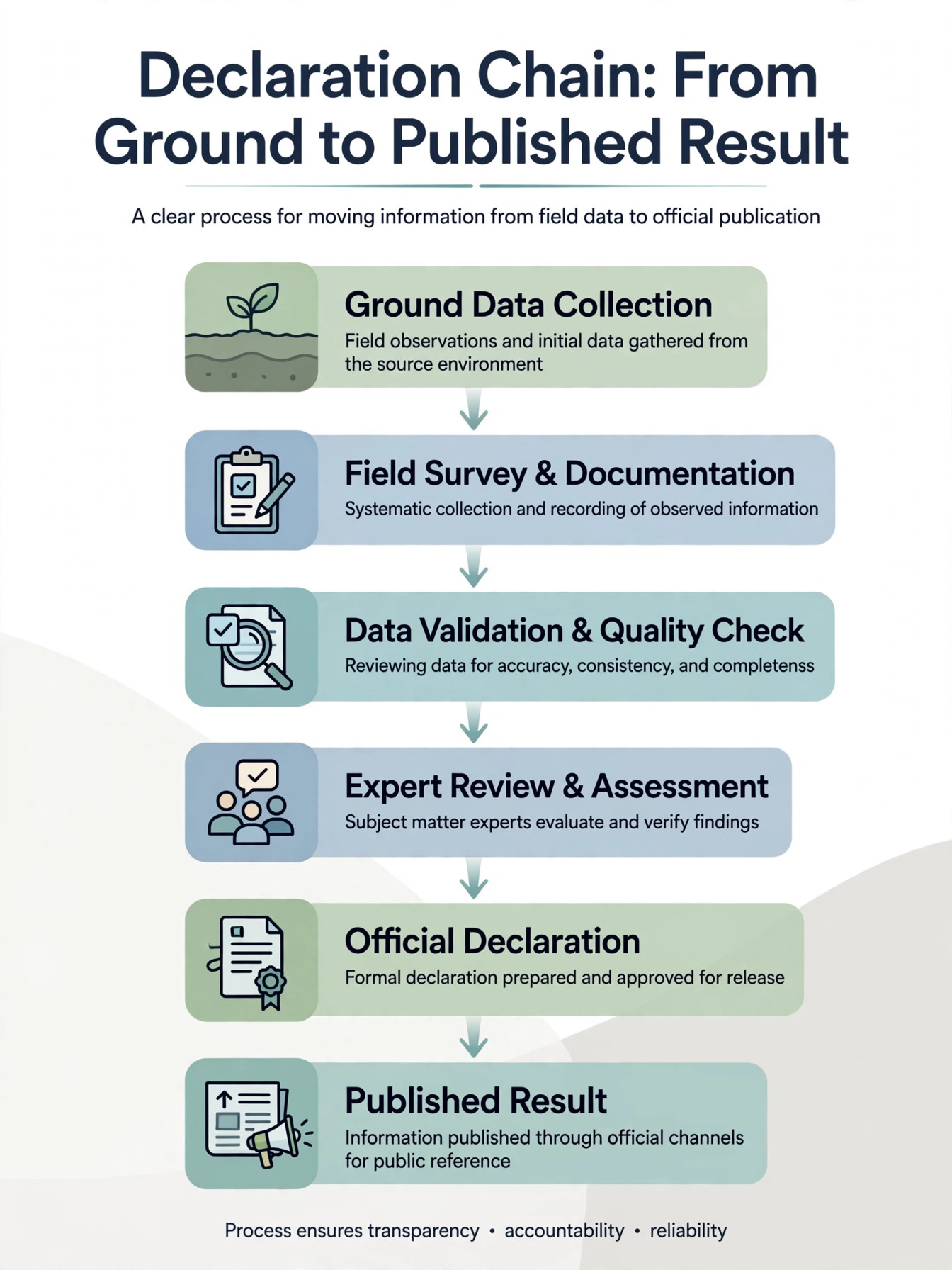
Every khanapara teer result today begins the same way, not on a screen but on an archery ground. Teer is an archery based lottery, which means the winning number is decided by real arrows hitting a real target. A group of archers lines up at a fixed distance from the target and shoots a set number of arrows within a fixed time window. When the shooting stops, officials count how many arrows struck the target. The last two digits of that count become the official result number for the round. If the count ends in a number like forty seven, the declared result is 47. This is an example only, not a real result, and it is shown only so you understand the format.
That counting step is the heart of the declaration, and it is also the reason a result can never be known in advance. Nobody, not the archers, not the officials, not any website, knows the final two digits until the arrows have landed and the count is finished. Any page that claims to know a khanapara teer result before the shooting ends is not reporting. It is inventing. Keep that principle in mind, because it is the simplest lie detector you will ever need for teer pages.
From the archery ground to the announcement
The declaration follows a fixed chain. First, ticket sales for the round close at the licensed counters. Second, the archers shoot. Third, officials count the arrows that hit the target, usually with more than one person involved so the count can be cross checked. Fourth, the result is announced at the ground itself, in front of everyone present. Only after that announcement does the number travel outward: to the counters, to the organizers, and then to result websites. A khanapara teer result today page that respects this chain will never show a number before the ground announcement has happened. The gap between the end of shooting and the appearance of the number online is not a delay. It is the verification window, and it is exactly what a careful site uses to confirm the digits.
Why the count takes the time it takes
Counting several hundred arrows by hand, carefully, in front of witnesses, cannot be rushed without risking an error. Officials recount when something looks off, and a recount adds minutes. Weather, light conditions, and the number of archers on a given day can all stretch or shrink the session slightly. That is why declaration times are best described in general words: the morning session declares in the late morning hours, and the day session declares in the afternoon hours. Exact clock times can shift slightly from day to day, so readers should always check the live result page rather than memorizing a fixed minute. A site that pretends the declaration happens at one unchanging second every day is selling false precision.
Who Declares the Khanapara Teer Result and Why That Matters
A khanapara teer result is declared by the organizing body that runs the game at the ground, not by any website. Websites are publishers. They report the number; they do not create it. This distinction is the foundation of result trust. When you ask whether a number is correct, you are really asking two questions. Did the ground officials declare this number, and did the website copy it faithfully? A trustworthy page answers both by naming its process and by keeping declared numbers separate from anything unconfirmed.
The legal frame matters here too. Teer operates as a legal, state regulated lottery in Meghalaya, and the game runs under the oversight that applies to licensed lottery activity. For official information about the state and its regulated activities, the Government of Meghalaya portal is the authoritative reference. Knowing that teer sits inside a regulated framework helps you understand why the declaration process is formal: licensed counters, supervised shooting, witnessed counting, and a public announcement. Informality anywhere in that chain is a warning sign, not a shortcut.
Why authority cannot be faked, only imitated
An unreliable page can copy the look of an official announcement very easily. It can use the same words, the same layout, even a similar name. What it cannot copy is the chain of custody. A genuine khanapara teer result travels from the ground, through the organizers and counters, to the publisher. Each step leaves a trace: the announcement at the ground, the counter displays, and corroboration across independent publishers who all received the same number from the same declaration. When several independent result pages show the same two digits for the same round, that agreement is strong evidence that the declaration was real and faithfully copied. When only one obscure page shows a number and nobody else agrees, treat it as noise until it is confirmed.
Why the Same Khanapara Teer Result Today Can Show Up at Slightly Different Times on Different Websites
One of the most common questions from players is also one of the most misunderstood. If the khanapara teer result today is a single official number, why does one website show it at one minute and another website show it a few minutes later? The answer is refresh cycles, not conspiracy. Websites do not receive the number through a single synchronized broadcast. Each publisher learns the declared number through its own channel, a counter update, an organizer message, a trusted feed, and then a human or an automated check confirms it before it goes live on the page.
That confirmation step is where the minutes go. A careful publisher waits for a second corroborating source before publishing, because publishing a wrong number is worse than publishing a right number three minutes late. A careless publisher skips the check and goes live first. So when you see Website A showing the round a few minutes before Website B, you are usually seeing the difference between a site that verifies and a site that rushes, not a difference in the result itself. The number, once declared, is identical everywhere honest. Only the timestamp of publication varies.
What a few minutes of difference actually prove
Small timing differences prove that publishers are independent, which is healthy. What should worry you is the opposite pattern: a page that consistently publishes numbers long before every other page, round after round. Nobody is that fast through honest channels every single day. Consistent extreme earliness usually means the page is posting predicted or recycled numbers and correcting them later, or simply not checking at all. Trust the page whose timing looks human: usually quick, occasionally a few minutes behind on a difficult round, never impossibly early.
Declared vs Unconfirmed – Reading a Khanapara Teer Result Status Correctly
Not every number you see on a result page carries the same weight, and honest pages make the difference visible. A declared result is a number that has been officially announced after the counting finished. An unconfirmed number is anything else: a number seen on one channel but not yet corroborated, a number posted before the announcement, or a number carried over from an earlier session by mistake. Best Teer Result treats these two categories very differently. Declared numbers are published as results. Unconfirmed numbers are never presented as results.
This is why you will sometimes see a placeholder dash where you expected digits. A dash is not a missing feature. It is a deliberate statement that says the round has not been declared yet, or that the declaration has not been verified. Pages that fill every slot with a number at all times, declared or not, are choosing completeness over honesty. They would rather show you something wrong than show you an honest blank. Learn to respect the dash. It is the mark of a page that waits for the truth.
How to read a session row like an auditor
Look at a full session row the way an auditor would. It should show the session name, morning or day, the round, FR or SR, the declared number or an honest placeholder, and ideally some indication of when it was updated. If a page shows a number for a round whose shooting window has not even closed yet, the number cannot be declared, no matter what the page claims. If a page shows yesterday’s numbers under today’s date, that is a staleness failure, not a declaration. These checks take seconds once you know what to look for, and they separate reporting from theater immediately.
How Best Teer Result Verifies a Number Before Publishing It
Trust is a process, not a slogan, so here is the process in plain language. When a Khanapara round approaches declaration, this site watches for the number through more than one independent channel. A single sighting is treated as unconfirmed. The number is published only when at least two independent sources agree on the same two digits for the same round. If the sources disagree, publication waits while the conflict is resolved, because a conflict means at least one source is wrong and guessing which one is not verification.
After publication, the number is rechecked against the wider set of publishers and against the counter level information as it settles. If a correction ever proves necessary, the correction is made openly and the record is updated, because a corrected record is more trustworthy than a silently wrong one. The goal at every step is the same: the number on this page should match the number announced at the ground. For the fastest view of the current day, the live Khanapara teer result page carries the latest declared numbers with their session and round labels.
Why this site sometimes looks slower than the fastest page
It does, occasionally, and that is intentional. The verification rule means this page will sometimes publish a few minutes after a page that skips verification. That gap is the cost of being right. Over a full month of daily sessions, the careful page builds a record of matching the official declaration nearly every time, while the rushing page builds a record of silent corrections and unexplained changes. Players who stay with the game long enough learn to value the boring, consistent page over the exciting, early one. Accuracy compounds. Speed does not.
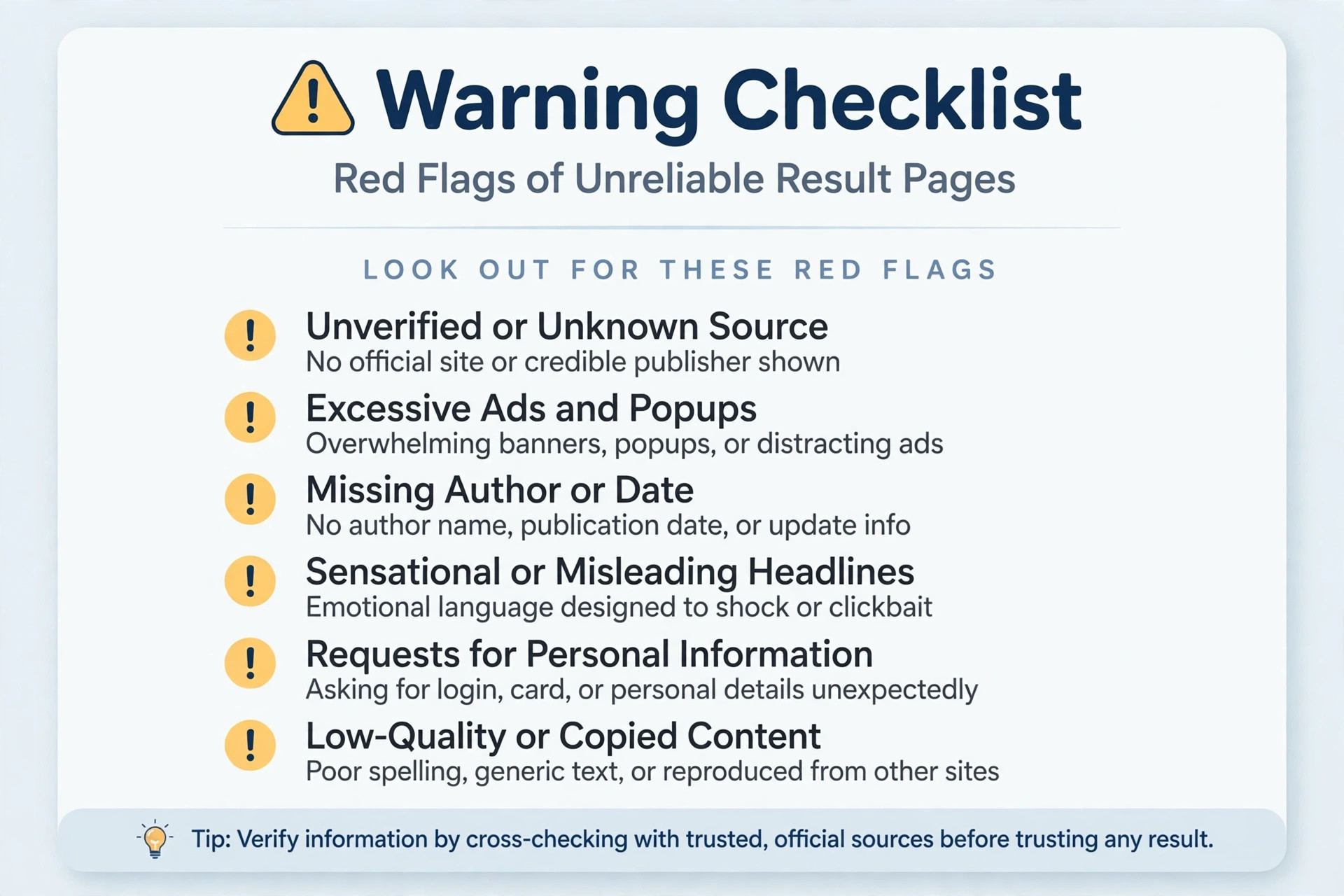
Red Flags That Expose an Unreliable Khanapara Teer Result Page
Once you know how a real declaration works, unreliable pages become easy to spot. They share a set of habits, and you can check for these habits on any teer result khanapara page you visit.
First, watch for numbers that appear before the shooting window closes. As established above, the result cannot exist before the count, so any pre declaration number is invented by definition. Second, watch for pages that never show a placeholder or a pending state. A page with a number in every slot at every hour is not miraculously fast. It is filling blanks. Third, watch for frequent silent changes, where a number shown in the morning is different by afternoon with no note and no explanation. Honest corrections are announced. Silent ones hide mistakes.
Fourth, look at the page’s history discipline. A serious result page keeps an orderly archive where each date shows its own numbers. A sloppy page mixes dates, repeats old numbers under new dates, or lets yesterday’s session linger under today’s heading. Fifth, be wary of pages that surround the result with prediction content: so called common numbers, hit numbers, target numbers, or house and ending tips presented as reliable. Predictions are entertainment at best and deception at worst, and a page that leans on them is telling you where its priorities lie. This site publishes no prediction content at all, because predictions cannot be verified and verification is the entire point here.
The single fastest trust test
If you only have ten seconds, run this test. Open the page and find the most recent round. Ask three questions. Is the number labeled with its session and round? Is there any status, declared or pending, attached to it? Does the timing make sense against the general declaration windows, late morning for the morning session and afternoon for the day session? A page that answers all three clearly is probably doing the work. A page that shows bare digits with no context is asking for blind faith, and blind faith is exactly what unreliable publishers sell.
Khanapara Morning Teer Result and the Day Session Follow the Same Trust Standard
Khanapara runs more than one session in a day, and each session deserves the same rigor. The khanapara morning teer result belongs to the morning session, declared in the late morning hours, and the day session result belongs to the afternoon session, declared in the afternoon hours. Each session has its own FR and SR rounds, its own shooting, its own counting, and its own declaration. A number from the morning session is never a substitute for a day session number, and mixing them up is one of the most common errors on careless pages.
This site applies the identical verification process to both sessions: two independent agreeing sources before publication, honest placeholders while unconfirmed, and open correction if the record ever needs it. If you follow the morning game specifically, the dedicated Khanapara morning teer result page keeps that session’s declared numbers and history in one place, separate from the day session. Keeping sessions separated is a small discipline that prevents a large category of mistakes, and it is one more way to judge whether a publisher is careful. Any page that merges sessions into one undifferentiated list is not organizing information. It is dumping it.
Why session separation protects the player
Consider what happens when sessions are mixed. A player checks a page in the afternoon, sees a number, and assumes it belongs to the day session’s FR round, when it is actually the morning session’s SR number carried forward by a lazy layout. The player then acts on a number from the wrong round. The publisher’s untidiness becomes the player’s loss. Clear session labels, separate histories, and distinct declaration windows exist to prevent exactly this. When you evaluate a khanapara teer page, session clarity is not cosmetic. It is protective.
Using the Khanapara Teer Result List and Khanapara Teer Previous Result Records Wisely
Beyond today’s number, serious players consult history. The khanapara teer result list is the running archive of declared numbers, and khanapara teer previous result records let you review past sessions date by date. Used wisely, an archive is a transparency tool: it lets you confirm that a page’s past publications were stable and consistent, which is evidence of a careful publisher. The khanapara teer result list archive keeps declared numbers organized by date and session so that history can be checked rather than taken on faith.
Used unwisely, an archive becomes a superstition engine. Past results do not determine future results, because every round is a fresh count of fresh arrows. No pattern in old numbers can reveal the next declaration, and any page suggesting otherwise has crossed from reporting into prediction. Treat the archive as a record for verification and personal bookkeeping, nothing more. If you keep your own notes, compare them against the archive occasionally. Agreement between your notes and the published record is one more quiet confirmation that the publisher you rely on is steady.
What a healthy archive looks like
A healthy archive has one entry per session per date, with FR and SR clearly distinguished, and no gaps filled with suspiciously convenient numbers. Dates should progress in order, sessions should be labeled consistently, and corrections, on the rare occasions they happen, should be visible rather than hidden. An archive that meets these standards is doing something most pages never bother with: it is making itself auditable. Auditability is the final form of trust. Any publisher can claim accuracy for today. Only a disciplined archive proves it across months.
FR and SR Rounds – The Two Declarations Behind Every Session
Every khanapara teer session contains two official rounds: the First Round, universally shortened to FR, and the Second Round, shortened to SR. The two rounds are separate shootings with separate counts and separate declarations. The FR result is declared first, and the SR result follows after its own shooting and counting are complete. This is why a complete session row always shows two numbers, one for each round, and why a page showing only one number for a session is showing you half the picture.
Understanding FR and SR also protects you from a common confusion. Because the rounds are declared at different times, there is always a window in which FR is declared and SR is still pending. During that window, an honest page shows the FR number alongside a placeholder for SR. A dishonest page fills the SR slot early with a guess. If you ever see both numbers appear at the exact same instant, long before the second shooting could have finished, you are looking at fabrication, not declaration. The two round structure is not just a format detail. It is a built in authenticity check that anyone can use.

Frequently Asked Questions About Khanapara Teer Result Trust
How can I tell whether a khanapara teer result today number is officially declared or just a rumor?
Check for three things: a session label, a round label, and a plausible declaration time. A genuinely declared number is attached to a specific session, morning or day, and a specific round, FR or SR, and it appears after the general declaration window for that session, late morning for morning sessions and afternoon for day sessions. A bare number with no labels, or a number appearing well before the shooting could have finished, has not been declared no matter how confidently the page displays it. When in doubt, compare the number across two or three independent pages. Agreement across publishers is the practical test of a real declaration.
Why did two websites show the same khanapara teer result today at different times?
Because each publisher learns the declared number through its own channel and applies its own verification before publishing. A careful site waits for a second corroborating source, which adds a few minutes. A rushing site publishes the first sighting immediately. The declared number itself is identical on honest pages. Only the publication timestamp differs. Consistent extreme earliness from one page, round after round, is the pattern to distrust, since no honest channel is first by a wide margin every single day.
Does Best Teer Result ever publish a number before it is confirmed?
No. The rule on this site is simple: a number is published as a result only after at least two independent sources agree on the same two digits for the same round. Before that point, the slot shows an honest placeholder. This means the page can occasionally appear a few minutes behind the fastest publishers, and that gap is deliberate. Publishing an unconfirmed number would be faster, but it would also sometimes be wrong, and a result page that is sometimes wrong has failed at its one job.
What should I do if a result page shows a number but no declaration status?
Treat the number as unconfirmed until you can corroborate it elsewhere. A page that shows digits without telling you whether they are declared, pending, or carried over from an earlier session is withholding the exact information you need to trust it. Cross check the number on one or two other independent pages, and confirm that the session and round labels match. If the page also lacks session separation or shows numbers before declaration windows, consider switching to a publisher with clearer labeling, such as the session separated pages on the Best Teer Result homepage.
Can I trust a khanapara teer previous result record from any archive site?
Trust it only if the archive is disciplined. A reliable archive lists one entry per session per date, keeps FR and SR distinguished, progresses in date order, and does not fill gaps with convenient numbers. Spot check a few dates you remember against your own notes or against another archive. Consistent agreement is good evidence of careful record keeping. Also remember what an archive cannot do: past results cannot predict future results, since every round is a fresh count of freshly shot arrows. Use history for verification and bookkeeping, not for forecasting.
Is teer legal, and who is allowed to participate?
Teer is a legal, state regulated lottery in Meghalaya, operated through licensed counters under the applicable lottery framework. Participation is for adults aged 18 and above only. If you play, do so responsibly and within limits you can afford: set a budget before you start, never chase losses, and treat teer as paid entertainment rather than a source of income. Anyone showing signs of problem gambling should stop and seek help from a responsible gambling support service.

Conclusion
The khanapara teer result today is not just two digits on a screen. It is the end product of a physical process: archers shooting, officials counting, a public declaration, and then a chain of publishers carrying that number to you. Every link in that chain is a place where accuracy can be protected or lost. Now you know how the declaration works, who has the authority to make it, why honest pages publish at slightly different times, what declared and unconfirmed statuses mean, how this site verifies before publishing, and which red flags expose pages that guess instead of report.
Carry that knowledge with you every time you check a result. Favor the page that labels its sessions, separates its rounds, shows honest placeholders while a declaration is pending, and keeps a clean, auditable archive. That page may not always be the fastest, but it will be the one you can rely on when it matters. Check today’s verified numbers, compare them if you like, and hold every publisher, including this one, to the standard described here. Trust in teer results is earned one verified declaration at a time, and you now know exactly how to tell who is earning it.
Responsible play note: teer is a legal lottery in Meghalaya for adults aged 18 and above only. Please play responsibly and never wager more than you can afford to lose.